
Falmouth Fishing Charters
Falmouth fishing charters run quick access to Vineyard Sound rips, inshore shoals, and offshore tuna lanes shaped by tide, bait, and warm-water inflow.
TrustedFish connects anglers with proven local captains in Falmouth—no commissions, no pay-to-play listings, no BS. Every charter on our platform is invite-only, vetted for skill, local knowledge, and reputation. If they’re listed, they’ve earned it.
Top Rated Charters in Falmouth
Falmouth Fishing Guide
Falmouth sits at the northern edge of Vineyard Sound, where strong tide flow, warm southern water, and constant bait movement create one of the most consistent mixed-bag fisheries on Cape Cod. Guides here build trips around shoals, rips, and contour changes—places where sand eels, squid, and bunker get swept into predictable lanes. Everything in Falmouth fishing revolves around tide direction, water temperature, and the strength of the south-side flow.
Striped bass feed along rip lines formed by shallow shoals like Nobska, Middle Ground, L’Hommedieu, and Hedge Fence. Incoming tide pushes warm, cleaner water across these tops, lifting sand eels and squid into the rip. Bass sit on the up-current face early in the tide, then drop behind the shoal as the flow strengthens. When tide slackens, fish distribute along the edges and require slower presentations. Guides time drifts across the rip’s shoulder, matching weight to depth to keep jigs in the strike zone without dragging.
Bluefish track bait along the same shoals but roam wider. They move aggressively during warm-water surges, especially when Vineyard Sound gains temperature faster than Buzzards Bay. When blues push shallow, topwater baits produce powerful strikes. When wind chops the surface and clarity drops, blues fall deeper and take metals or trolled spoons. Their activity is tied directly to temperature and bait compression.
Sea bass hold to bottom relief, especially off deeper ledges and mixed-rock patches south of Falmouth. They push shallower as water warms, then retreat to deeper structure during heavy tide. Scup fill the same areas but sit tighter to the bottom and feed continuously when drift speed stabilizes. These bottom programs are reliable and create steady action even when bass move off the shoal tops.
Offshore access is a major advantage. Falmouth sits within reasonable range of Stellwagen Bank, Crab Ledge, the Dump, and backside tuna edges. When bluefin push inshore, charters run toward the edge of Vineyard Sound or east toward Chatham lines. Tuna feed on sand eels, herring, and mackerel depending on the year, and guides adjust accordingly: jigs for sand eel years, stickbaits when fish push the surface, and troll spreads when tuna roam deeper temperature breaks.
Wind plays a defining role. Southwest wind stabilizes warm water and enhances shoal action. Southeast wind pushes swells into the Sound but can improve clarity once past initial turbulence. Northerly wind cools water quickly, pushing bass deeper. On tough weather days, Falmouth charters retreat into protected Buzzards Bay edges or target bottom structure where drift control is easier.
Commercially, Falmouth fishing charters stay in demand because the zone offers rapid access to high-value shoals, consistent warm-water influence, and direct offshore routes, allowing guides to produce bass, blues, bottom fish, or tuna depending on conditions.
Popular Fishing Areas
Nobska Point & Rip
Nobska is one of Falmouth’s signature striped bass and bluefish rips. Fast tide from Vineyard Sound pushes against the point, creating a sharp rip line where bait funnels across the shoal. Bass sit just inside the rip early in the tide, rising for sand eels and squid. As flow strengthens, fish drop slightly deeper and require heavier jigs or spoons. Bluefish sweep the rip edges on warm-water pushes and take topwater along the calmer side of the seam. Guides drift or slow-troll across the rip depending on current speed, adjusting approach angle each pass to stay lined up with the feeding lane.
Middle Ground
A high-relief shoal producing reliable striper and bluefish action. Incoming tide lifts bait along the top, pulling predators high in the column. Strong flow creates a well-defined rip that can fish for hours. Outgoing tide still produces but usually pushes fish deeper off the back edge. Sand eels dominate the forage base here, making soft plastics and metals effective. Guides run repeated cross-rip drifts, adjusting weight to keep baits in the active lane. Middle Ground stays productive from late spring through summer due to constant bait movement.
L’Hommedieu Shoal
An expansive shoal system holding striped bass, sea bass, and bluefish. Tide direction determines which edge fires. On incoming tide, fish push onto the top; on outgoing, they concentrate on the down-tide drop-off. When squid are present, the bite becomes aggressive on the surface. Sea bass sit deeper on the gravel patches and respond well to jigs kept tight to bottom. Guides monitor GPS tracks to repeat productive drifts along the strongest seams.
Hedge Fence Shoal
A consistent summer shoal where bass and blues track bait through narrow passes on each tide cycle. Early tide provides the best bite before flow becomes too heavy. On slack water, fish disperse and follow sand eel schools along the edges. When south wind aligns with the tide, clarity improves, extending the feeding window. Guides fish both casting and jigging programs, targeting the rip line early and shifting to deeper edges as flow increases.
Great Harbor / Falmouth Inner Waters
Protected waters producing school stripers, scup, and sea bass. Bait moves through channels and around mooring fields on tide swings. Incoming tide brings cleaner water, improving visibility; outgoing compresses bait into edges and drop-offs. Guides use light tackle to work the pockets and channel transitions. This area serves as a dependable fallback zone on heavy-wind days.
Extended Target Zones
The Hooter
A temperature-break zone southwest of Martha’s Vineyard that draws bluefish, bonito, and late-season false albacore. Warm water pushes bait toward the structure, creating brief but consistent windows. Guides troll metals and small spreader bars or cast small jigs into surface feeds.
Woods Hole Rips
Powerful currents funnel through Woods Hole passage, creating sharp rips holding stripers and blues. Tide speed is extreme, so timing matters. Guides fish the first hour of incoming or outgoing when bait lifts and predators move into position.
The Dump
A productive offshore zone for bluefin tuna and mahi during temperature-break years. Birds and scattered weedlines help locate life. Guides run troll spreads early, then switch to jigs or stickbaits once marks appear deeper.
Robinson’s Hole
A narrow passage with strong tide movement, attracting stripers and blues feeding along current seams. Clean incoming water improves visibility and allows longer drifts. Ideal on moderate tide cycles.
Fishing Seasons in Falmouth
Spring
Stripers arrive early along south-side shoals, keying on squid and sand eels. Rips at Nobska and Middle Ground fire quickly once temperatures hit the mid-50s. Sea bass enter deeper structure by late May. Bluefish return as Vineyard Sound warms. Guides run mixed programs: shallow drifts early morning, deeper jigging as tide accelerates.
Summer
Peak season for Falmouth. Shoals produce consistent striper and bluefish action. Sea bass stack on gravel-bottom structure. Scup stay active throughout the bay. Offshore bluefin tuna feed along the banks and edges. Calm mornings allow surface casting for bass and tuna; afternoon southwest wind pushes charters into protected waters.
Fall
Cooling water compresses bait schools, triggering strong striper and bluefish action. False albacore and bonito appear along warm edges. Offshore tuna remain active as long as temperature breaks hold. Guides shift to deeper jigging and structure-driven passes as surface activity declines later in the season.
Winter
Most predators move south or offshore. A few holdover stripers remain deep in protected waters but fishing options are limited. Offshore tuna grounds become weather-dependent and target-only for experienced crews. Few charters operate, and winter is considered downtime except for rare groundfish opportunities.
Top Gamefish in Falmouth
- Striped Bass – 5–40+ lbs Hold on south-side rips and shoals; strongest late spring–summer; taken on jigs, soft plastics, and topwater.
- Bluefish – 2–12 lbs Track warm-water edges and rips; strongest summer; hit metals and plugs.
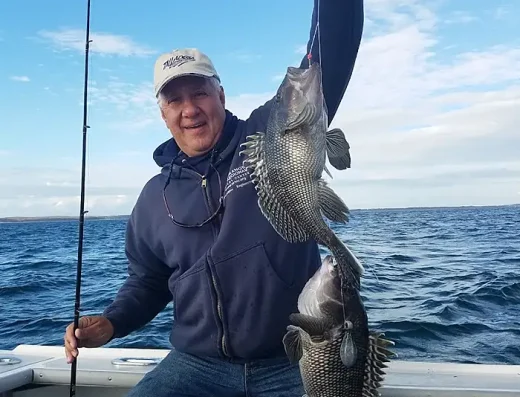
- Black Sea Bass – 1–5 lbs Sit on rock and gravel structure; peak late spring–summer; taken on jigs and bait rigs.
- Scup (Porgy)– 1–3 lbs Hold deep on gravel bottom; strongest summer–fall; taken on bait.
- Bluefin Tuna – 30–200+ lbs Hold on temperature breaks and banks; strongest summer–fall; taken on jigs, stickbaits, and troll spreads.
- False Albacore / Bonito – 3–12 lbs Feed along warm clean edges; strongest late summer–fall; taken on metals and small jigs.
Falmouth Fishing FAQs
Best time for Falmouth fishing charters?
Late spring through fall for stripers, sea bass, bluefish, and tuna.
Are runs long?
Shoals and rips are close; offshore tuna varies by break position.
Is tide important?
Critical. Rips and shoals rely on tide speed for feeding activity.
Beginner-friendly?
Yes—protected inner waters and bottom fishing are reliable for all skill levels.
Do charters clean fish?
Yes—legal stripers, sea bass, and scup.
Can Falmouth mix inshore and offshore?
On the right day, yes. Wind dictates the program.