
Old Adaminaby Fishing Charters
Old Adaminaby gives anglers fast access to Lake Eucumbene’s premier trout grounds, with steep banks, deep timber, and year-round action for browns and rainbows.
TrustedFish connects anglers with proven local captains in Old Adaminaby —no commissions, no pay-to-play listings, no BS. Every charter on our platform is invite-only, vetted for skill, local knowledge, and reputation. If they’re listed, they’ve earned it.
Top Rated Charters in Old Adaminaby
Old Adaminaby Fishing Guide
Old Adaminaby sits on the western edge of Eucumbene, which means quick access to steep banks, drowned timber, and long points that fall fast into deep water. This lake fishes by the rules of cold water: find the temp line, find the food, and you’ll find the trout. Guides spend most days working transition zones where banks, timber lines, and contour changes intersect.
Low light is everything. At first and last light, trout ride up into the upper layers and feed tight to the edges. Once the sun hits the water, they slide deeper and spread out. That’s when you lean on downriggers, long-line trolling, or slow-rolled plastics along the contour edges. Calm, bright conditions demand slower work; any wind on the lake creates lanes that can fire up shallow fish again.
Both banks and boats produce here, but charters win because they can reposition fast. Captains shift between points, trees, and inflows depending on wind direction. Westerlies and north-westerlies push insects and micro-bait onto the key banks, and you’ll see trout stack up there. Cold fronts can shut the bite down for a few hours, but the rebound after a front often creates a strong mid-day window.
When water rises, trout push up onto fresh edges for worms and grubs. When the lake drops, they pull back to the old shoreline contour and hold there. Clear water calls for long leaders and smaller offerings; coloured water lets you run heavier gear and work tighter to structure.
Night fishing is a major part of Old Adaminaby. The big browns patrol mud flats, rocky edges, and river mouths after dark. They’re hunting silhouettes, not flash. Dark, no-moon nights fish best with slow, heavy tracks and larger profiles.
Trips range from soft plastics to full trolling spreads. Boat speed, lure depth, rod angles, and repeat passes matter far more here than lure colour. Eucumbene is big, wind-exposed water, and guides spend as much time planning angles as they do setting lines. The advantage at Old Adaminaby is proximity: prime zones sit minutes from the ramp, which lets you respond quickly when depth bands shift through the day.
Popular Fishing Areas
Anglers Reach Arm
Old Adaminaby Boat Ramp Points
Eucumbene River Mouth
Braemar Bay
Wide, shallow-to-deep basin with big mud and gravel flats. Southerly and easterly winds push food across the flats, bringing rainbows shallow early. At night, browns patrol the deeper edges. Overcast days often keep fish shallow longer than expected. Guides mix topwater, shallow hardbodies, and trolling the outer lip.
Cemetery Point
Steep edges, sharp drops, and natural wind lanes. Trout often sit in the 8–18 ft layer where wind pushes micro-bait. Deeper browns sit along the first break. Deep divers along the contour line are standard here. The shape of the point splits wind lanes, and working the slack side often turns fish that others miss.
Extended Target Zones
Trout Farm Corner
A tight contour pocket with a reliable pressure seam on westerlies. It traps insects and baitfish. Early activity is tight to the bank, then trout slide to 12–20 ft as light increases. Runs well with medium divers and slow plastics. Holds steady even through midday when other spots slow down.
Buckenderra Channel Lanes
A travel corridor between deep basins and feeding shelves. Browns and rainbows use it during temp changes and barometric shifts. Downrigger work is effective when the lake stratifies. With strong wind, bait funnels down the trench and produces consistent mid-depth hits.
Braemar Inflow Shelves
Small inflows create micro-temperature shifts that draw rainbows aggressively. Fish sit on the lip in 6–10 ft, intercepting food drifting down the lane. Best with long casts, light leaders, and shallow runners. Cloudy afternoons and aligned winds push productivity up.
Yens Bay
A quiet basin with mixed bottom. Strong insect life makes it a good fly zone. Trout cruise predictably, especially during warm mornings. Deeper sections hold suspended rainbows at 15–25 ft. Low-pressure days turn this area on when the rest of the lake gets tough.
Fishing Seasons in Old Adaminaby
Spring
Summer
Bright weather pushes trout deeper. Steep banks, timber, and the channel edges become key. Browns rise early, late, and under cloud. Rainbows spread across mid-depth points. Downriggers, lead core, and weighted lines keep lures in the zone. Night fishing for browns around timber is extremely productive.
Fall
Peak brown trout movement. Cooling water brings aggressive early and late feeding. Browns stage deep by day and run shallow when temps fall in the afternoon. Rainbows stay active across mid-depth flats. Wind events create strong surface slicks loaded with smelt. Consistent action across all weather patterns.
Winter
Cold water stabilizes the fishery. Browns hold deeper on bright days but rise into mid-depths under cloud. Rainbows work dropoffs and the old river bed. Slow trolling and weighted presentations dominate. Calm, bright winter days often create strong midday bites when trout move to roaming bait.
Top Gamefish in Old Adaminaby
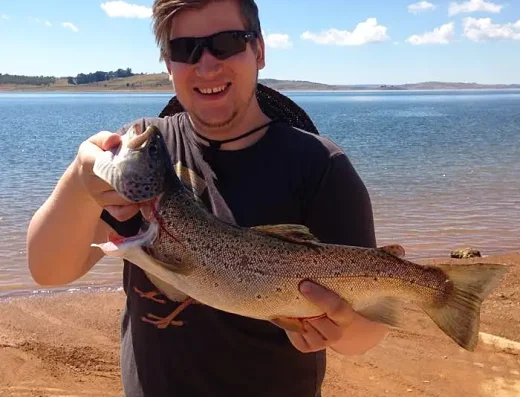
- Brown Trout – Primary target around Old Adaminaby. Hold along steep banks, submerged timber, and deep contours. Feed shallow early and late, then slide deeper once the sun hits. Taken on slow trolling, deep divers, soft plastics, and controlled drifts.
- Rainbow Trout – Consistent action species. Work long points, mid-depth flats, and inflow edges. Sit higher in the water column than browns. Hit shallow hardbodies, soft plastics, and long-line trolling, especially when wind pushes bait.
- Atlantic Salmon – Present depending on stocking cycles. Favor mid-depth water and clean temperature layers. Strike aggressively during slow trolls with spoons or plastics. Often ride higher in the column when surface chop forms.
- Redfin Perch – High-volume target around timber, weed pockets, and dropoffs. Respond strongly to small soft plastics, blades, and lightly weighted baits worked close to structure. School tightly, producing steady action once located.
- Golden Perch – Occasional warm-season catch. Hold near deep timber, broken bottom, and warm edges. Take soft plastics, blades, and small divers worked slow along structure.
Old Adaminaby Fishing FAQs
Best time of year?
Spring and fall for numbers; winter nights for big browns.
Trip length?
How do guides find fish in big water?
Depth sounders, wind direction, contour passes, and seasonal patterns.
Do charters run in bad weather?
Yes, unless wind makes it unsafe.
Is night fishing common?
Very. Night sessions produce many trophy browns.
What gear is used?
Light spinning gear, trolling outfits, downriggers, and plastics.
Do guides clean fish?
Most will clean and bag your catch.
How far from the ramp?
Most productive water is within 5–15 minutes.
Fly fishing available?
Yes. Both shore and boat-based options depending on season.