
Quintana Roo Fishing Charters
Quintana Roo fishing charters access reef edges, lagoon systems, drop-offs, and bluewater current lines shaped by the Caribbean’s northbound flow.
TrustedFish connects anglers with proven local captains in Quintana Roo —no commissions, no pay-to-play listings, no BS. Every charter on our platform is invite-only, vetted for skill, local knowledge, and reputation. If they’re listed, they’ve earned it.
Top Rated Charters i n Quintana Roo
Quintana Roo Fishing Guide
Quintana Roo gives anglers three distinct fisheries in tight range: lagoon systems, reef structure, and offshore pelagic lanes. The region fishes well because of consistent current from the Caribbean pushing bait north, while lagoons like Nichupté, Ascensión Bay, and Sian Ka’an run on wind-driven water height rather than predictable tide. Charters work these contrasting systems based on wind, clarity, and current speed.
Inside the lagoons, tarpon, snook, bonefish, and permit anchor the fishery. These fish follow water height first. Easterly winds push warm water deep into the lagoons, spreading fish across flats, mangrove edges, and shallow basins. Westerly winds drain water out, concentrating predators into cuts, channels, and the first deep pockets inside the mangroves. Guides pole or drift slow, matching presentation depth to clarity. Tarpon sit where mud transitions to sand; snook stay inside shadow pockets; bonefish track warmer shallows; permit move between grass beds and sand holes depending on light angle and wind.
Reef structure runs parallel to the coast and forms the most consistent predator line. Snapper, grouper, barracuda, mackerel, and jacks hold tight to reef breaks, rubble, and cross-current seams. On calm days, ballyhoo and sardine schools sit behind the reef in lighter flow, and predators slide up the edges. On heavier current days, bait gets pushed across the lip, and predators feed just outside the break. Guides troll small ballyhoo spreads, run deep lures along relief, or drift live baits depending on current speed and how bait stacks.
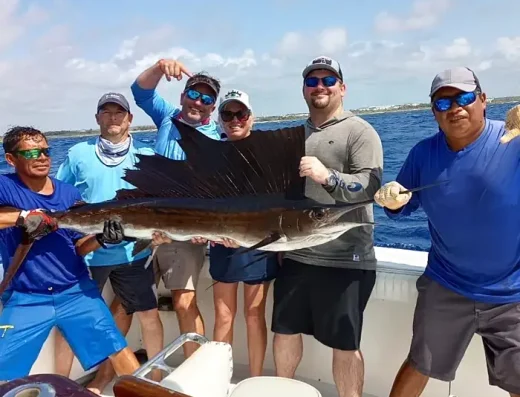
Offshore, the Caribbean current shapes everything. When current tightens, sailfish, tuna, wahoo, dorado, and marlin compress into narrow rips and color lines. Sailfish ride high where clean-blue meets lighter-tint water. Dorado track debris and sargassum; tuna hold along deeper marks; wahoo run contour edges where current hits reef gaps. When current weakens, pelagics spread out and charters shift to search mode, covering ground with tighter trolling passes until they find life. Seasonally, sailfish push hardest in winter–spring, dorado peak in summer–fall, and wahoo surge when cooler water brushes the reef line.
Wind dictates where a charter day starts. Strong easterlies kill flats visibility but improve offshore rips; strong westerlies blow out lagoon cuts but flatten inshore reef lanes. When wind and current align, feeding windows lengthen. When they oppose each other, things tighten into short bursts. Charters time the shifts carefully—offshore early when wind is light, inshore or lagoon when afternoon blow picks up.
The most valuable feature for anglers booking here is versatility. If offshore life spreads thin, guides slide to the reef and produce snapper, barracuda, and jacks. If the reef dirties, they move into lagoons for tarpon or permit. If flats visibility is high, tailing bonefish and permit give sight-casting opportunities. It’s rare for all three systems to shut down at once, which gives Quintana Roo consistently reliable fishing regardless of season.
Popular Fishing Areas
Outer Reef Line (Cancún to Punta Nizuc)
Nichupté Lagoon System
Isla Mujeres Offshore Corridor
Punta Allen / Ascensión Bay
Cozumel Channel
Extended Target Zones
Sian Ka’an Cuts
Playacar Reef Fingers
Punta Maroma Drop-Off
Northern Flats (Bacalar Chico Area)
Fishing Seasons in Quintana Roo
Spring
Sailfish remain strong early. Dorado increase as water warms, and tuna become more consistent under bird life. Permit and bonefish start moving wider across flats with more stable temps. Tarpon feed aggressively in lagoon channels during rising water. Charters mix offshore pelagics with inshore or flats action based on wind strength.
Summer
Prime dorado and tuna season. Sargassum lines hold dorado; tuna track deeper color edges. Wahoo appear along contour lines. Lagoon water warms, spreading tarpon and snook widely; best windows are early. Flats fishing is consistent when wind allows visibility. Guides often start offshore and shift to flats or mangroves as wind builds.
Fall
Storm outflow pushes debris offshore, creating strong dorado lanes. Tuna remain active along temperature breaks. Tarpon feed well inside lagoons before cooler pushes arrive. Wahoo improve as water cools slightly. Guiding strategy depends on clarity: offshore debris lines when stable, inshore channels when swell increases.
Winter
Peak sailfish season offshore. Strong northbound current creates sharp rips, and sails ride high on clean-blue edges. Tuna hold deeper and respond to weighted baits. Inshore, snook and tarpon feed during warm spells in protected cuts. Flats fishing depends entirely on visibility—calm days offer shots at bonefish and permit.
Top Gamefish in Quintana Roo
- Sailfish – 30–70 lbs Run offshore rips; peak winter–spring; raised on teasers and taken on pitch-baits or ballyhoo spreads.
- White/Blue Marlin – 80–300+ lbs Hold deeper along color edges; strongest summer–fall; targeted with lures and live baits.
- Dorado – 5–40 lbs Stack under debris and weed lines; summer–fall peak; hit trolled or pitched baits.
- Blackfin Tuna – 5–25 lbs Track deeper color changes; strongest spring–summer; hit jigs and feathers.
- Wahoo – 10–50 lbs Run reef gaps and contour lines; strongest winter–spring; taken on high-speed lures.
- Tarpon – 5–120 lbs Hold lagoon cuts and channels; strongest spring–fall; targeted on live bait or jigs.
- Snook – 2–20 lbs Sit in mangrove shadows; feed during warm spells; taken on plastics or bait.
- Permit – 5–20 lbs Track grass–sand transitions; best spring–summer; targeted with crabs or flies.
- Bonefish – 1–5 lbs Work shallow flats; strongest under calm, clear conditions.
Quintana Roo Fishing FAQs
When is the best time for Quintana Roo fishing charters?
Winter–spring for sailfish; summer–fall for dorado and tuna; lagoons fish year-round.
Are offshore runs short?
Yes. Rips and color edges sit close to the reef line.
Is inshore productive?
Very. Tarpon, snook, permit, and bonefish feed consistently when visibility and water height align.
Do charters mix offshore and inshore?
Often, depending on wind and client preference.
Does wind matter?
Yes. It controls clarity and lagoon water height.
Do charters clean the catch?
Yes—most fillet tuna, dorado, snapper, and reef species at the dock.