
Cooper Landing Fishing Charters
Cooper Landing fishing charters position anglers on the Upper Kenai and Russian Rivers, targeting salmon and wild trout in fast, structure-driven current lanes controlled by glacial flow and seasonal runs.
TrustedFish connects anglers with proven local captains in Cooper Landing —no commissions, no pay-to-play listings, no BS. Every charter on our platform is invite-only, vetted for skill, local knowledge, and reputation. If they’re listed, they’ve earned it.
Top Rated Charters in Cooper Landing
Cooper Landing Fishing Guide
The Cooper Landing fishery is simple on paper and technical in practice: it is all about how the Upper Kenai and Russian Rivers deliver salmon and food downstream, and how trout and dollies stack behind them. Guides here are not hunting water; they are hunting the exact seams, shelves, and depth bands where current, structure, and fish line up for the day’s flow and clarity.
The Upper Kenai leaves Kenai Lake cold and colored by glacial silt. Flow volume and temperature dictate the pace. When visibility is 2–4 feet and the river holds its turquoise-green, guides expect trout and dollies to sit on soft edges, behind boulders and ledges, picking off eggs and smolt drifting past. When melt spikes and color thickens, fish slide deeper and stay tighter to bottom, staying in the slowest part of the seam. Weight and bead size get adjusted run by run to keep the presentation just above substrate.
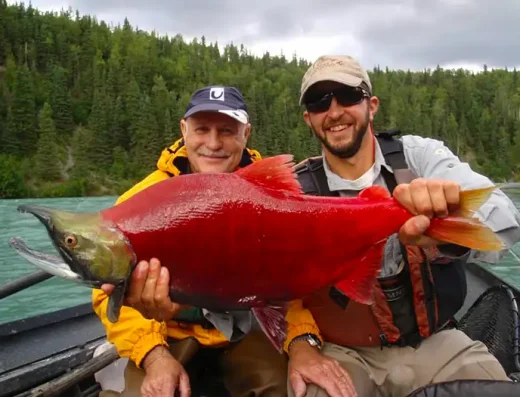
The Russian River confluence is the main driver of sockeye and coho traffic in the Cooper Landing reach. Russian fish enter the Kenai and immediately feel more speed; they slide into the softer inside triangle where the Kenai’s main flow breaks. On strong days, the bulk of the sockeye column travels tight to the gravel bar on the Russian side; on lighter runs, they hold mid-channel and drop deeper. Guides place clients where the line of fish and the fly path are parallel, not crossing, because crossing angles reduce consistent contact.
Once salmon are established, trout behavior changes. Early in the run, rainbows and dollies shadow salmon closely, but they still honor traditional holding structure: drop-offs, center seams, and tailouts. As more fish stage and start pairing, egg and flesh drift builds, and trout push further downriver, patrolling behind redds and along deeper shelves. Guides track this shift daily, moving from upper staging water to mid- and lower-river feeding lanes over the course of the season.
The Kenai Canyon and the Skilak-bound drift add another layer. The canyon compresses the river into narrow corridors with strong, even pressure. Big trout and dollies prefer this zone when food volume justifies the energy cost of holding there. Guides use controlled drifts and strict line management, because any slack pulls beads or flies out of the narrow feeding lane. Below the canyon, toward Skilak, the river slows and broadens. Shelves, inside shoulders, and long tailouts become key for fish that want softer, consistent water late in the season.
Pressure and light matter. On bright, busy days, salmon slide deeper and trout sit under them in harder-to-reach slots. On overcast days with steady pressure, salmon lanes stay more compact and trout move wider. Cooper Landing fishing charters build around these patterns: start where the run is strongest, match weight and drift speed to that section, and relocate as soon as current and traffic push fish into new lanes. It is a technical river, but once you read the seams, it is highly repeatable.
Popular Fishing Areas
Upper Kenai – Kenai Lake Outlet
This stretch controls the rest of the system. Cold, fast water leaves Kenai Lake and immediately forms standing waves, seams, and first-shelf drop-offs. Early season trout and dollies stack in the first soft water behind structure, feeding on smolt and early eggs. Sockeye move along gravel margins, hugging the seam line that offers the least resistance. Guides row controlled drifts, placing beads and streamers tight to the transition where fast green water meets the slower inside lane. Weight adjustments are constant; too light and you ride above fish, too heavy and you hang up.
Russian River Confluence
This is the main sockeye and later coho engine in Cooper Landing. Russian fish hit the Kenai’s faster main stem and immediately slide into the relative shelter of the confluence wedge. When runs are strong, salmon file shoulder-to-shoulder along the Russian-side gravel bar; on leaner pushes they spread into mid-river. Guides position angles so flies track straight with the migration lane and maintain depth through the entire drift. Trout and dollies sit slightly downstream, intercepting eggs and disturbed food; once the spawn is underway, those downstream feeding lanes become as important as the primary salmon line.
Upper Kenai – Canyon Reach
Below the outlet, the river narrows and drops into the canyon. Current speed increases and holding water becomes more defined. Large trout and dollies use every boulder, ledge, and inside seam to hold in heavy flow while feeding on eggs, smolt, and later flesh. This is boat water only. Guides control drift speed carefully to keep rigs in the slowest part of each lane without dragging bottom. When salmon are thick, the canyon can produce some of the heaviest trout of the system.
Jim’s Landing to Skilak Lake
This float transitions from canyon structure to wider, slower river approaching Skilak. Velocity breaks, inside bends, and long tailouts become primary. As salmon complete their spawn and break down, trout and dollies shift into these broader zones to intercept flesh and loose eggs. Guides watch for color changes and pockets where carcasses accumulate; those areas often hold stacks of feeding fish. Presentation becomes slightly less technical on depth but more about matching drift speed to the slower main flow.
Russian River Main Stem (Lower Walk-In Zones)
Clearer, faster, and more confined than the Kenai. Early-season trout feed on resident insects and smolt; once sockeye arrive, they shift to egg lines behind spawning areas. The Russian is wade-focused and punishes sloppy wading angles. Guides keep anglers tight to the productive seam and control drift length, as too long a drift pulls flies out of the correct depth band.
Extended Target Zones
Cooper Landing Side Channels
Side channels just upstream and downstream of town hold trout and dollies when main-river flow is high. These channels offer slower, clearer water and concentrated food. Guides use lighter setups and shorter drifts to work pocket water and small tailouts where fish sit under overhead cover.
Kenai Backwater Eddies
Soft eddies off the main line accumulate eggs, flesh, and debris. Trout and dollies slide in during peak drift, especially in late summer and fall. Guides drop anchor just above, feeding drifts along the slow edge without crossing into dead water.
Russian River Falls Pool (Timing-dependent)
When open and accessible, salmon stack below the falls on their way upstream. Trout and dollies are drawn in by the sheer volume of eggs and disturbance. Drift windows are tight and require accurate placement into the holding seam.
Lower Kenai Transitional Water (Early Season)
Before the big crowds and late-season chaos, early-run trout feed on smolt and early eggs along deeper outside bends. Heavier rigs and longer drifts are needed, but pressure is lower and fish behave predictably.
Fishing Seasons in Cooper Landing
Spring
As temperatures rise and ice recedes, trout and dollies wake up and begin feeding on available smolt and early insect life. Water clarity improves, and fish push from wintering holes onto shelves and softer seams. There are no major salmon runs yet, so this period is about resident fish. Guides rely on small streamers, smolt patterns, and beads mimicking early egg drift from winter-killed salmon. Low angling pressure means fish are less wary, but accurate depth control is still critical in the fast glacial water.
Summer
Summer is the main salmon-and-trout season. Early sockeye arrive at the Russian, then push through the confluence into the Upper Kenai. As soon as salmon fill the lanes, trout and dollies begin shadowing them. First, they key on loose eggs and disturbed invertebrates; then, as spawning peaks, they sit behind redd chains and intercept continuous egg drift. Cooper Landing fishing charters set up on specific migration lanes for salmon, then shift slightly downstream to target trout in the feeding bands. Later in summer, as fish tire and die off, flesh becomes a primary food source and guides balance between eggs, beads, and flesh flies.
Fall
Fall is the heavy-trout period. Carcasses break down in volume, and every shelf, tailout, and soft seam behind spawning areas becomes a conveyor belt of protein. Trout feed hard to bulk up before winter, and dollies remain glued to the same lanes. Cooler nights lower water temps and can lift clarity slightly, tightening feeding lanes even more. Guides focus on the stretches where salmon concentrations were densest earlier in the season, since that’s where the most flesh and eggs still move. It is one of the most targeted times for anglers chasing bigger rainbows in the Cooper Landing reach.
Winter
Most charters shut down or operate selectively. Flows are low and cold, with ice forming on edges. Trout and dollies hold in wintering holes: deep, slow water with minimal energy demand. If fished, presentations are slow, deep, and compact. Bite windows are brief during the warmest part of the day. This is maintenance season for guides more than production season.
Top Gamefish in Cooper Landing
- Sockeye Salmon – 4–12 lbs Travel tight gravel lanes in the Russian and Upper Kenai; strongest mid-summer; taken on precise parallel drifts that stay in the migration path.
- Coho Salmon – 6–15 lbs Hold in softer edges and backwater pockets; strongest late summer–fall; hit streamers and hardware when pressure drops or light softens.
- Rainbow Trout – 2–10+ lbs Sit behind salmon, ledges, and current breaks; feed on eggs, flesh, and smolt; peak July–October; taken with accurate bead and flesh presentations kept low in the seam.
- Dolly Varden (Char) – 1–6 lbs Track salmon migrations and hold tight to bottom relief; respond to beads and small streamers once egg drift begins; heavily concentrated during peak salmon activity.
- King Salmon (Chinook) – 10–40 lbs Early-run fish traveling deeper lanes; tightly regulated in upper sections; targeted with heavy drift setups or larger hardware on lower legal stretches.
Cooper Landing Fishing FAQs
When do Cooper Landing fishing charters typically run?
Prime charter season runs from June through September, aligned with salmon runs and peak trout feeding.
What is the best time for sockeye salmon?
Mid-summer, when Russian and Upper Kenai runs are pushing hard through the confluence and mainstem lanes.
When is trout fishing at its best?
Late July through fall, when egg and flesh drift is strong and trout and dollies are stacked behind salmon.
Can beginners fish this system effectively with a guide?
Yes. The river is technical, but guides handle positioning, rigging, and drift coaching so beginners can connect.
Is wading required, or are trips boat-based?
Both exist. Many Cooper Landing fishing charters use drift boats; some combine strategic wading with boat access.
Are fly and conventional methods both used?Are fly and conventional methods both used?
Yes. Beads, flies, and light spin setups are all standard depending on angler preference and conditions.
Do charters clean and package salmon?
Most operations will clean and bag sockeye and coho within regulations; long-term freezing and shipping are usually handled locally.
Does weather shut down the fishery?
Heavy rain or fast melt can reduce clarity and alter flows, but guides typically adjust location and drift strategy rather than cancel outright.