
Ashdown Fishing Guides
Ashdown fishing guides offer access to Millwood Lake’s flooded timber, river channels, and backwater sloughs for year-round bass, crappie, and catfish action.
Top Rated guides in Ashdown
TrustedFish connects anglers with proven local captains in Ashdown, Arkansas —no commissions, no pay-to-play listings, no BS. Every charter on our platform is invite-only, vetted for skill, local knowledge, and reputation. If they’re listed, they’ve earned it.
Ashdown, AR Fishing Guide
Ashdown sits right near Millwood Lake, one of the best freshwater fisheries in southwest Arkansas. Most charters here are half-day or full-day guided trips on bass boats, built to maneuver through submerged timber, creeks, and oxbows. You’re not running miles offshore—most guides launch right from Millwood State Park or Beard’s Bluff and fish within a few miles of the ramp. Run distances are short, but the fishing’s solid.
The lake itself has over 29,000 acres of water, filled with stumps, hydrilla beds, and flooded timber—perfect habitat for largemouth bass. There’s a mix of open water, creek mouths, and heavy cover zones, so anglers often switch between flipping jigs, working crankbaits along ledges, or slow-rolling spinnerbaits in shallower backwaters. During crappie season, vertical jigging around standing timber or slow-trolling minnows over brush piles is common. Catfish trips are run with baited lines, cut shad, or stink bait along the river channel or near submerged structures.
Ashdown fishing is pretty consistent year-round, but timing matters. Spring means pre-spawn bass and shallow crappie. Summer gets hotter and slower mid-day, but early mornings and night trips can be productive. Fall picks up again with active fish chasing bait. And in winter, crappie school up tight and the bigger blues start biting well in deeper water.
Though it’s a small town, Ashdown pulls in anglers from Hampton Bays, Little Rock, and even across the state line in Texas. It’s not a flashy spot, but that’s part of the draw—it’s local, it’s steady, and the guides here know how to work this lake.
Fishing Seasons in Ashdown
Spring (March–May)
Spring in Ashdown is all about the bass and crappie bite. As water temps rise into the 50s and 60s, largemouth bass push shallow to stage and spawn, making them more aggressive and easier to catch. Crappie follow a similar pattern, stacking up in 3–6 feet of water near submerged brush and timber. Most charters this time of year focus on pitching soft plastics or jigs near cover and running shallow crankbaits. It’s also a prime time for numbers and size, especially in the creeks and coves near Beard’s Bluff.
Summer (June–August)
The heat in Ashdown doesn’t kill the fishing—it just shifts the game. Midday bites slow down, so guides start early or run evening/night trips. Largemouth bass pull off to deeper structure or hang near hydrilla beds. Crankbaits, Texas rigs, and Carolina rigs become go-to methods. Catfish pick up too, especially at night, with trotlines or rod-and-reel setups using cut bait. Bluegill are also active, especially for families or light tackle trips near the shorelines. Surface activity picks up at dawn and dusk, and you’ll find schooling bass busting shad on top in the open water.
Fall (September–November)
Fall is one of the most underrated seasons to fish Ashdown. The lake starts cooling down, and fish get active again. Bass chase shad in the backwaters and flats, and you’ll see blowups around creek mouths and ledges. Guides often use lipless crankbaits, topwaters, and swimbaits during this time. Crappie begin moving toward deeper staging areas but are still catchable in shallower brush. Catfish remain consistent, and a few locals start setting out jug lines again. It’s a good mix of action, and the crowds thin out compared to spring.
Winter (December–February)
Winter means slower fishing, but for those who know where to go, it’s worth the grind. Crappie stack tight to brush piles in 12–20 feet of water, and vertical jigging is the ticket. Bass move deeper and become more sluggish, but you can still pick them off with jerkbaits, blade baits, or slow jig presentations. Blue catfish become the main target for meat hunters, especially out in the river channels. Most winter trips are shorter and focused, often with electronics guiding the entire day.
Gamefish in Ashdown
- Largemouth Bass – 1–7 lbs. Caught around hydrilla beds, stumps, and brush year-round using jigs, soft plastics, crankbaits, and frogs depending on season and depth.
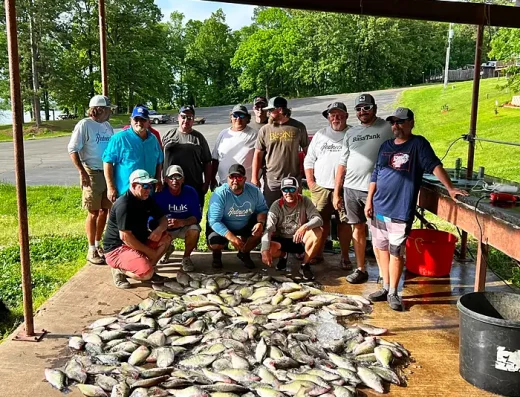
- Crappie – 0.75–2 lbs. Found near submerged brush and standing timber, especially in spring and winter. Jigging and live minnows are standard.
- Blue Catfish – 5–40 lbs. Targeted in deeper water and river channels using cut bait or stink bait, especially during winter and early summer.
- Flathead Catfish – 5–30 lbs. Caught around submerged logs and structure at night with live bait. More active in warmer months.
- White Bass – 1–3 lbs. Caught in spring and fall during shad runs near creek mouths and main-lake points. Small crankbaits and spoons work best.
- Spotted Bass – 1–3 lbs. Found in rocky areas and deeper points, typically mixed in with largemouths. Finesse tactics work well.
- Bluegill – 0.25–1 lb. Active spring through summer along the banks. Caught with worms or crickets under floats—great for kids and casual trips.
Ashdown Fishing FAQs
What’s the best time of year to fish in Ashdown?
Spring and fall usually offer the most consistent action, especially for bass and crappie. Winter can be great for crappie and catfish if you don’t mind the cold.
Do Ashdown fishing guides provide gear?
Yes, most guides supply rods, tackle, bait, and safety gear. Just bring weather-appropriate clothing, snacks, and a valid fishing license.
Where do most fishing trips launch in Ashdown?
Millwood State Park and Beard’s Bluff are two of the main public ramps used by local guides.
Can beginners or kids fish here?
Definitely. Many guides run family-friendly charters with simple rigs targeting bluegill, crappie, or smaller bass close to shore.
What fish can I catch in the winter?
Primarily king salmon and rockfish. Halibut are closed in January but otherwise available much of the year.
How long are fishing trips in this area?
Most trips are 4–6 hour half-days or full 8-hour days. Some catfish or bass trips offer night options during summer.
What techniques are used on Ashdown trips?
Expect a mix of casting, trolling, jigging, and bait fishing depending on the target species and season.
Are there other cities nearby with similar fishing?
Ashdown is a quieter spot, but nearby lakes in Hampton Bays and southwest Arkansas offer similar structure and seasonal fishing.
What should I bring on a summer fishing trip?
Bring sunscreen, water, a hat, polarized sunglasses, and light breathable clothing. Early mornings are cooler, but it heats up fast.
Is a license required for to fish with a guide?
Yes, anyone over 16 needs an Arkansas fishing license. You can buy one online or at local bait shops. Most guides will remind you.