
Vail Valley Fishing Charters
Vail Valley fishing guides give anglers direct access to Colorado’s best trout water across the Eagle River, Gore Creek, upper Colorado River, and a network of alpine tributaries holding browns, rainbows, cutthroat, and seasonal brook trout.
TrustedFish connects anglers with proven local captains in Vail Valley —no commissions, no pay-to-play listings, no BS. Every charter on our platform is invite-only, vetted for skill, local knowledge, and reputation. If they’re listed, they’ve earned it.
Top Rated Charters in Vail Valley
Vail Valley Fishing Guide
Vail Valley fishing guides operate across a rapidly changing mountain river system where flow rate, temperature, clarity, and daily runoff conditions dictate every bite window. The Eagle River and local tributaries rise and fall with snowmelt, afternoon storms, and upstream release schedules, making timing critical for consistent action. Without a guide, anglers often spend hours searching water that looks promising but is either too fast, too cold, or too pressured. Local guides eliminate this guesswork by reading seams, structure, insect activity, and fish positioning in real time, putting clients directly into productive lanes with flies matched to current hatches.
The advantage becomes even more pronounced as seasons shift. Cold nights, midday warming, and afternoon storms all change water behavior within hours. Trout slide from tight holding lies into active feeding lanes when temperature hits the optimal range. Guides anticipate these windows, choose correct fly patterns, and select the right drift angles to keep presentations in the strike zone. Whether wading the Eagle, drifting the upper Colorado, or fishing alpine creeks for cutthroat, Vail Valley fishing guides deliver efficient access to moving-water trout that react instantly to changing flow and hatch conditions. This turns a technical fishery into a productive, structured experience.
Popular Fishing Areas
Eagle River Main Stem
The Eagle River is the core fishery of Vail Valley, offering year-round trout opportunities shaped by flow rate, temperature, and insect cycles. Browns and rainbows hold along oxygen-rich seams, pocket water, and deeper mid-channel grooves depending on season. Spring runoff pushes fish tight to structure, while summer clarity increases surface activity during mayfly, caddis, and PMD hatches. Fall concentrates browns in deeper bends and pre-spawn staging areas. Guides choose beats based on clarity bands, release schedules, and daily temperature swings, ensuring anglers fish water where trout are positioned to feed rather than conserve energy.
Gore Creek Tributary System
Gore Creek offers technical, clear-water fishing with smaller but highly selective browns and rainbows. Its low flows and visibility require precise presentations and fly selection, especially during summer hatches when trout move into shallow riffles and pocket water. During cooler mornings or after storms, fish slide into deeper pools for stable flow and oxygen. The creek’s tight cover and narrow lanes demand controlled drifts and accurate casts. Guides focus on reading micro-currents, matching insect stages, and using stealth approaches to avoid spooking trout in these confined, high-clarity conditions.
Upper Colorado River
The upper Colorado provides consistent drift-fishing for stronger rainbows and browns that hold along seams, shelves, and soft-water pockets formed by larger volume flow. Clarity and flow rates dictate where trout feed: clear water pulls them higher into riffles and ledges, while off-color water shifts them toward slower edges and inside bends. Seasonal hatches—caddis, PMDs, midges, stoneflies—drive aggressive feeding windows. Guides select lines that hold the right speed for long drifts, reposition frequently, and adjust fly depth to match changes in current and underwater structure.
High-Alpine Lakes & Tributaries
High-alpine lakes and feeder creeks surrounding Vail Valley offer cutthroat, brook trout, and opportunistic rainbows in cold, ultra-clear water. These systems warm slowly, creating short but intense feeding periods triggered by sunlight, insect emergence, and surface activity. Trout hold along drop-offs, submerged rock, and wind-driven structure, rising aggressively during summer hatch peaks. Guides monitor weather patterns and time access for optimal light and temperature, ensuring anglers reach alpine fish when they’re most active. Precision casting and controlled presentations are critical due to shallow visibility and easily spooked fish.
Extended Target Zones
Lower Eagle Canyon Beats
The lower Eagle cuts through canyon structure where deeper pools, boulder pockets, and complex seams hold larger trout. Shade, gradient, and depth create cooler, more stable water during summer, while spring runoff pushes fish into protected pockets. Trout sit along cushion water behind rocks and at the heads of deep slots where oxygen and food converge. Guides use nymph rigs and tight-line techniques to maintain depth control and drift accuracy in turbulent conditions, maximizing hook opportunities in narrow feeding lanes.
Wolcott to Eagle Bend Transition
This mid-valley stretch of the Eagle River mixes riffles, shallow shelves, and longer runs that produce excellent hatch-driven action. PMDs, caddis, and yellow sallies drive dry-fly activity during stable summer flows, while deeper nymphing dominates shoulder seasons. Trout adjust positions constantly as sun angle, temperature, and insect emergence change. Guides shift between dry-dropper, indicator, and Euro-nymph setups to match feeding depth, ensuring anglers stay in the active water column rather than drifting too high or too deep.
Fishing Seasons in Vail Valley
Spring
Spring in Vail Valley brings fluctuating flows, colder mornings, afternoon warming, and strong pre-runoff feeding. Trout concentrate in slow edges and deeper pools early, then slide into riffles and seams as temperature climbs. Midges, BWOs, and early caddis dominate hatches. Runoff timing determines mobility: rising flows reduce clarity but push fish into softer water where nymphing becomes highly effective. Guides monitor daily temperature curves, clarity lines, and release patterns to time sessions around the most active windows.
Summer
Summer delivers the most consistent dry-fly fishing across Vail Valley. Stable flows, higher temperatures, and strong mayfly and caddis hatches produce predictable surface action. Trout feed aggressively in riffles, pocket water, and main seams as long as oxygen levels remain high. Afternoon storms may briefly spike flows, creating short, high-productivity feeding windows as insects wash into drift lanes. Guides shift between dries, dry-droppers, and shallow nymph rigs to match fish movement throughout the day.
Fall
Fall brings lower flows, cooler water, and highly active browns entering pre-spawn mode. Trout concentrate in deeper bends, gravel transitions, and structure-rich runs. Mayfly and midge hatches remain steady, with streamer fishing improving as water cools. Clear conditions make trout selective, demanding accurate presentations and fly changes. Guides focus on timing light angles, matching subtle hatches, and targeting deeper holding water where fish conserve energy before feeding aggressively.
Winter
Winter compresses trout into stable, slow-moving water where temperatures remain survivable. Midday warmth creates short feeding windows, especially during midge activity. Trout hold deep in pools, soft edges, and sheltered canyon beats. Low flows and clear water demand gentle approaches and precise drifts. Guides use small nymphs, tight-line techniques, and controlled depth to stay in the narrow feeding zone. Even in cold conditions, properly timed outings produce reliable action.
Top Gamefish in Vail Valley
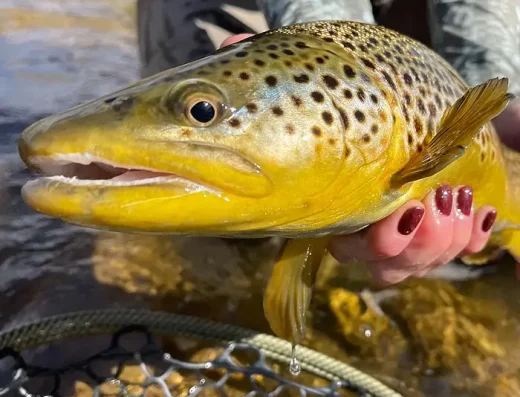
- Brown Trout – 12–24 inches Hold in deeper runs, seams, and pocket water. Strong, sustained fighters that strike nymphs, dries, and streamers depending on season. Peak activity during fall pre-spawn and summer hatches.
- Rainbow Trout – 10–22 inches Aggressive surface feeders during summer hatches. Hold in riffles, seams, and oxygen-rich runs. Hard initial runs and acrobatics define the fight. Most active in stable summer and spring conditions.
- Cutthroat Trout – 10–16 inches Found primarily in alpine lakes and tributaries. Visual feeders responding well to dries. Quick, darting fights in cold, clear water. Most active during short summer feeding windows.
- Brook Trout – 8–14 inches Abundant in colder tributaries and alpine lakes. Hold near structure and shallow drop-offs. Fast strikes and short, energetic fights. Peak action occurs midsummer.
- Mountain Whitefish – 12–18 inches Bottom-oriented fish holding in deep runs and slower tailouts. Consistent nymph eaters with steady, deliberate fights. Provide dependable action during winter and early spring.
Vail Valley Fishing FAQs
Do I need prior fly-fishing experience?
No. Vail Valley guides provide instruction on casting, drifting, fly selection, and reading water so beginners and experienced anglers both succeed.
What waters do Vail Valley guides fish?
The Eagle River, Gore Creek, upper Colorado River, and multiple high-alpine creeks and lakes depending on season and conditions.
When is the best time to fish Vail Valley?
Summer offers the strongest dry-fly action, spring provides pre-runoff feeding, fall delivers trophy potential, and winter concentrates fish in deep holding water.
Is gear included with a guided trip?
Yes. Guides supply rods, reels, flies, waders, and safety equipment. Anglers typically only need a Colorado fishing license.
Can trips be tailored to skill level?
Yes. Guides select locations and methods—wade fishing, drift fishing, alpine creeks—based on experience and goals.