
Homestead Fishing Charters
Homestead fishing charters give anglers direct access to Biscayne Bay flats, Everglades backcountry channels, inshore mangrove systems, and the upper Florida Keys where tarpon, snook, redfish, bonefish, and snapper feed year-round.
TrustedFish connects anglers with proven local captains in Homestead —no commissions, no pay-to-play listings, no BS. Every charter on our platform is invite-only, vetted for skill, local knowledge, and reputation. If they’re listed, they’ve earned it.
Top Rated Charters in Homestead
Homestead Fishing Guide
Homestead fishing charters operate across one of Florida’s most dynamic shallow-water systems, where tide height, wind direction, and water clarity shift fish movement hour by hour. These waters connect Biscayne Bay, the Everglades backcountry, and the upper Keys, creating constant transitions between clear flats, tannin-stained creeks, mangrove shorelines, and deep backcountry channels. DIY anglers often struggle because productive lanes change rapidly—tarpon slide between basins, snook reposition with wind-driven water pushes, and bonefish move onto or off flats depending on light and tide. Local guides eliminate this guesswork by tracking clarity lines, pressure zones, bait movement, and micro-depth shifts that dictate where fish feed.
The multi-zone nature of the Homestead fishery demands adaptable strategies. A hard east wind may stack clean water onto Biscayne flats, opening bonefish and permit opportunities, while an incoming tide pushes snook and redfish deep into mangrove sloughs. Afternoon warming in the backcountry may activate juvenile tarpon in protected creeks, whereas changes in tide speed determine whether groupers and snappers feed along channel edges. Homestead fishing guides read these signals in real time, adjusting drift lines, poling paths, and lure or fly selections. This precision gives clients immediate access to the strongest bite windows instead of covering dead water.
Popular Fishing Areas
Biscayne Bay Flats & Shorelines
The Biscayne Bay section near Homestead provides clear flats, shallow basins, and mangrove shorelines ideal for bonefish, permit, snook, and seasonal tarpon. Water clarity and light penetration dictate fish movement: bonefish slide onto hard sand and turtle grass flats on incoming tide, while permit hold deeper edges until water height rises. Snook and reds stay tight to mangrove shade pockets where tidal flow moves shrimp and pilchards. Wind direction influences visibility and pushes warmer or cooler water across the flats. Guides pole quietly, reading wakes, shadows, and bottom transitions to place anglers within feeding lanes without spooking fish.
Everglades Backcountry Channels
The Everglades backcountry west of Homestead features tannin-stained creeks, sheltered bays, and deep channels where snook, redfish, tarpon, and black drum feed. Tidal flow interacts with wind-driven water movement, pushing fish deep into mangrove tunnels on rising water and out toward basin edges as tide falls. Juvenile tarpon roll in protected creeks during warm conditions, while snook hunt along submerged structure and current seams. Water temperature and salinity shifts can redirect entire groups of fish within hours. Guides rely on local knowledge of protected routes, seasonal patterns, and pressure-sensitive zones to position anglers where fish actively feed.
Upper Florida Keys Transition Zone
The transition zone between Homestead and the upper Keys mixes clear flats, channel cuts, and patch-reef edges that hold tarpon, snapper, grouper, and roaming pelagics. Incoming ocean water pushes clarity into the system, triggering active feeding along edges where tidal flow accelerates. Tarpon travel along predictable migration routes in spring and early summer, while snapper stack on channel ledges and rocky contour changes. Permit and bonefish roam flats when light and water height align. Guides adjust positions throughout the tide cycle, targeting specific depth bands and structure types to match shifting fish behavior.
Card Sound & Barnes Sound Mangrove Systems
Card Sound and Barnes Sound offer sheltered mangrove-lined waters with muddy pockets, oyster clusters, and shallow depressions ideal for snook, redfish, trout, and juvenile tarpon. Water color shifts fast—winds push clear bay water into one corner while pushing darker Everglades water into another, affecting visibility and feeding intensity. Snook and reds use tight mangrove edges and undercuts on rising tide, sliding onto shallow shelves as water height increases. Tarpon feed in deeper troughs and basin edges when conditions stabilize. Guides work quietly to avoid alerting fish in these tight, noise-sensitive environments.
Extended Target Zones
Crocodile Lake Basin
Crocodile Lake Basin provides calm, protected water where snook, tarpon, and redfish hold along oyster piles, mud channels, and sparse mangrove banks. The area’s soft-bottom contours create temperature stability, making it a productive winter and early spring zone. Slight tide changes reposition fish between undercuts, troughs, and shallow ledges. Guides target productive water by matching depth, tide speed, and clarity to feeding behavior, switching between live bait, soft plastics, and flies as conditions shift.
Feeder Creeks off Manatee Bay
Feeder creeks flowing into Manatee Bay produce strong action when tidal flow compresses bait. Snook and reds sit at points where creeks empty into deeper water, feeding on shrimp and pilchards flushed by rising or falling water. Juvenile tarpon often roll in the deeper bends during warm, stable conditions. Guides monitor tide timing carefully—too low and the creeks become inaccessible; too high and fish disperse. Precision casting and quiet approaches are essential in these narrow, tight-cover environments.
Fishing Seasons in Homestead
Spring
Spring brings stable warming trends and strong movement of tarpon, snook, and bonefish. Tarpon begin staging in backcountry basins and along Keys-side channels ahead of migration. Snook and reds feed aggressively along mangrove edges where rising water pushes bait. Biscayne flats see increased bonefish activity as light and water height improve. Guides adjust positions constantly to stay ahead of shifting clarity and temperature pockets, maximizing top feeding windows before wind or tide changes alter conditions.
Summer
Summer delivers peak tarpon, snook, and mangrove action. Juvenile tarpon feed in backcountry creeks early and late, while larger fish patrol basins and channels. Snook and redfish push deeper into mangrove systems during high water, then slide onto shallow points on falling tide. Bonefish and permit roam clearer flats when wind is minimal. Heat and storms dictate timing, with guides focusing on low-light periods and stable water to avoid mid-day shutdowns.
Fall
Fall stabilizes water temperatures, increases forage, and spreads fish across multiple zones. Snook and reds feed aggressively along mangrove sloughs and channel edges, while tarpon remain active in backcountry pockets until the first major cold fronts. Bonefish and permit respond well to lighter winds and improving water clarity. Guides rotate between flats, mangroves, and channels based on tide height and bait movement.
Winter
Fall stabilizes water temperatures, increases forage, and spreads fish across multiple zones. Snook and reds feed aggressively along mangrove sloughs and channel edges, while tarpon remain active in backcountry pockets until the first major cold fronts. Bonefish and permit respond well to lighter winds and improving water clarity. Guides rotate between flats, mangroves, and channels based on tide height and bait movement.
Top Gamefish in Homestead
- Tarpon – 20–150 lbs Explosive fighters holding in basins, channels, and warm backcountry creeks. Roll and feed during stable heat and tide movement. Peak action in spring and summer.
- Snook – 2–20 lbs Ambush predators positioned under mangrove edges, oyster cuts, and current seams. Hard initial strike and determined runs. Best on rising water and low-light periods.
- Redfish – 5–15 lbs Hold on mangrove points, oyster clusters, and shallow flats. Steady, powerful fighters responding well to tide-driven bait movement. Reliable year-round in protected zones.
- Bonefish – 3–8 lbs Fast, skittish runners inhabiting clear Biscayne Bay flats. Require precise presentations and quiet approaches. Most active with stable light and incoming tide.
- Snapper – 1–6 lbs Found along channel edges, patch reefs, and deeper mangrove cuts. Quick strikes and sharp dives. Consistent feeders on moving water.
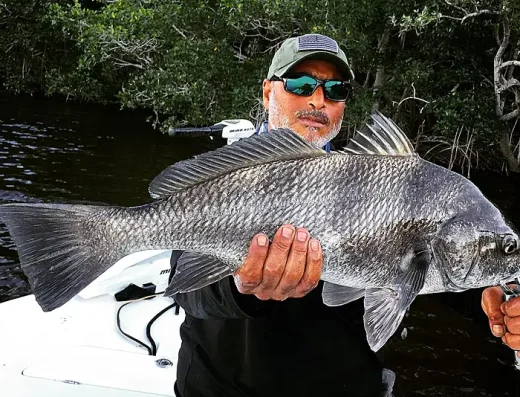
- Black Drum – 5–30 lbs Slow, heavy pulls along deeper troughs and soft-bottom pockets. Strong winter presence in backcountry channels and sheltered mangrove zones.
Homestead Fishing FAQs
What species can I catch with Homestead fishing charters?
Tarpon, snook, redfish, bonefish, snapper, black drum, and seasonal permit depending on tides and conditions.
Is Homestead good for beginner anglers?
Yes. Guides handle boat control, positioning, and bait presentation, allowing beginners to focus on fighting fish rather than navigating complex shallow systems.
When is the best time to fish Homestead?
Spring and summer offer peak tarpon and snook action, fall provides strong mangrove fishing, and winter concentrates fish in predictable backcountry zones.
Do guides provide all gear?
Yes. Rods, tackle, bait, and safety equipment are included. Fly gear is typically available on request.
Can trips access both Biscayne Bay and the Everglades?
Yes. Homestead sits between both systems, giving guides flexible options based on wind, tide, and water clarity.