
Buzzards Bay Fishing Charters
Buzzards Bay fishing charters work rips, ledges, shoals, and warm-water inflows that hold stripers, sea bass, scup, and bluefish through shifting seasonal currents.
TrustedFish connects anglers with proven local captains in Buzzards Bay —no commissions, no pay-to-play listings, no BS. Every charter on our platform is invite-only, vetted for skill, local knowledge, and reputation. If they’re listed, they’ve earned it.
Top Rated Charters in Buzzards Bay
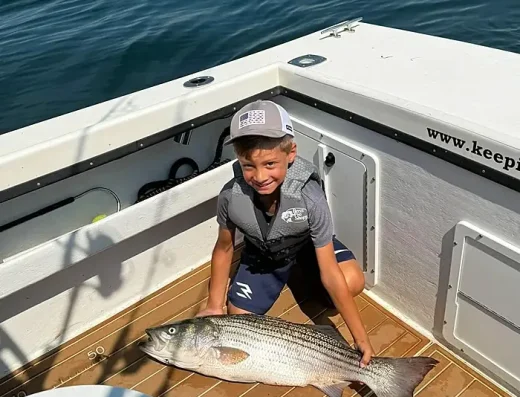
Buzzards Bay Fishing Guide
Buzzards Bay fishes on current speed, water temperature, and structure shape. Warm inflow from Rhode Island Sound mixes with cooler Cape Cod water, creating defined lines where bait stacks and predators feed. Guides build their day around these transitions: find the warm water, find the sand eels or bunker, and position the boat to work the edges where pressure drops form feeding lanes.
Striped bass track tide cycles closely. On incoming tide, bass move onto shallow ledges and reef tops where sand eels push with the flow. On outgoing tide, bait pulls off structure into deeper holes, and bass drop with them. When current accelerates, predators sit tight to the up-current face of boulders and rock piles; when current slows, they rise into the column and take topwater or lighter jigs. Guides adjust lure weight constantly to keep it in the zone rather than dragging or riding too high.
Black sea bass and scup follow bottom relief. Gravel patches, wrecks, and broken rock hold dense schools through summer. Sea bass feed strongest on the first push of tide when the flow isn’t overpowering. Scup fill the same edges but sit tighter to bottom. Guides anchor or hover over relief and drop jigs or bait rigs where marks are stacked near the bottom.
Warm years bring consistent bluefish and occasional bonito into the bay. Bluefish track bait along temperature breaks and feed aggressively on mid-depth metals. Bonito appear when water clears and bait balls tighten, usually late summer. Tide direction and bait concentration determine how wide or tight the search pattern needs to be.
Wind dictates water clarity. Southwest wind pushes warm, slightly stained water up the bay, activating bass and sea bass. North or northeast winds cool the surface fast and can shut down a bite until the water stabilizes. Buzzards Bay fishing charters pivot based on this: deeper edges during cold pushes, shallower structure during warm surges.
The bay is productive because it has warm-water flow, predictable structure, and fast tide movement. Those three factors create consistent feeding zones daily, giving charters reliable action through spring, summer, and fall.
Popular Fishing Areas
Canal West End
Where Buzzards Bay water meets Cape Cod Canal outflow. Tide movement is intense here, forming strong rips that concentrate bait. Striped bass stage along the drop-off waiting for sand eels flushed from the Canal. On incoming tide, warm bay water pushes bait into the rip line; on outgoing, colder Canal water tightens the edge and drives bass deeper. Guides drift or slow-troll just outside the heaviest flow, keeping lures in the seam rather than the main push. Early morning and late evening extend surface activity; daylight requires deeper presentations.
Wing’s Neck Ledges
A productive system of ledges, boulder piles, and sand transitions. Bass hold on the edges where current wraps around structure and forms predictable ambush lanes. Sea bass sit tight on deeper relief. On strong incoming tide, predators slide onto the shallower tops; on outgoing, they fall back into pockets off the main push. Guides run passes across both sides of the ledge depending on flow direction, adjusting jig weight constantly to maintain bottom contact without snagging.A productive system of ledges, boulder piles, and sand transitions. Bass hold on the edges where current wraps around structure and forms predictable ambush lanes. Sea bass sit tight on deeper relief. On strong incoming tide, predators slide onto the shallower tops; on outgoing, they fall back into pockets off the main push. Guides run passes across both sides of the ledge depending on flow direction, adjusting jig weight constantly to maintain bottom contact without snagging.
Weepecket Islands
A cluster of islands surrounded by rips, boulder fields, and sand eel concentrations. Stripers push into the rips during fast tide and drop into adjacent bowls when flow eases. Sea bass hold deeper off the rock edges. This area fishes best under southwest wind when warm water pushes across the islands, tightening bait schools. Guides work both drift and anchor setups depending on current speed and target species.
Hen and Chickens Reef
A large reef and broken-rock system producing stripers, scup, and sea bass. Strong current lifts bait along the top edge, and predators feed heavily on the first hour of moving water. When current slows, fish spread out and require longer drifts to find concentrations. Guides focus on the up-current face during fast tide and shift to adjacent depressions on slower water. Early season sees heavy sand eel presence; late season adds bunker and squid.
Buzzards Bay Shoals
Multiple shoal lines run the bay’s center, creating rips where warm water meets depth changes. Bluefish and occasional bonito work these shoals when clarity improves. Stripers feed on the edges during low-light hours. Guides troll or cast metals along the rip seams, then switch to jigs when fish drop deeper on slack tide. Shoals serve as strong midday options when other areas slow.
Extended Target Zones
Robinson’s Hole
A narrow cut with strong tide flushing bait between Vineyard Sound and Buzzards Bay. Bass and bluefish hold on the up-current side when flow peaks. Works best on incoming tide when Vineyard Sound’s warmer water pushes through. Guides drift tight to the edge and fish lures naturally with current.
Hadley Harbor
Protected pockets and channels holding schoolie stripers and scup. Water clarity stays higher here on windy days, making it a fallback zone. Best fished on rising tide when bait floods the edges. Guides use light tackle to work shallow transitions.
Naushon Island Reefs
Rocky edges and deeper bowls surrounding the island chain. Stripers and sea bass feed along contour changes. Strong southwest wind pushes warm water into the zone, activating the bite. Guides run mixed drifts and vertical jigs.
Quicks Hole
Fast-moving water between Naushon and Nashawena Islands. Bass and bluefish feed aggressively during peak tide. Clear incoming water improves activity. Guides drift through the cut and target both side pockets and the main seam.
Fishing Seasons in Buzzards Bay
Spring
Warm water pushes back into the bay, bringing sand eels and early striped bass. Sea bass enter from deeper grounds, filling ledges and reef systems. Bluefish appear as temperatures stabilize. Guides focus on sand eel-driven structure and early morning rips for stripers, shifting to deeper edges for sea bass.a
Summer
Peak mixed-species season. Stripers hold on ledges and rips; sea bass and scup dominate deeper structure; bluefish roam mid-bay shoals; bonito appear during clear warm cycles. Guides alternate between casting, jigging, and bait depending on current speed and clarity. Warm-water surges bring fish shallow early and late; mid-day action shifts deeper.
Fall
Bass feed aggressively before cooling temperatures push them south. Bluefish remain active; sea bass and scup stay strong until late fall. Bait schools tighten with dropping temps, concentrating predators. Guides run structure circuits based on wind-driven water temp changes.
Winter
Cold temperatures push most predators out. Limited school bass remain deep. Offshore movements dominate. Few charters operate, and trips shift to deeper scouting or limited bottom fishing when conditions allow.
Top Gamefish in Buzzards Bay
- Striped Bass – 5–40+ lbs Hold on ledges, rips, and boulder fields; strongest spring–summer; taken on jigs, topwater, and bait.
- Black Sea Bass – 1–5 lbs Sit tight to rock and wreck structure; strongest late spring–summer; taken on jigs and bait rigs.
- Scup (Porgy) – 1–3 lbs Hold on gravel and mixed bottom; peak summer–fall; taken on bait rigs.
- Bluefish – 2–12 lbs Track bait along temperature breaks; strongest summer; hit metals and fast baits.
- Bonito – 2–8 lbs Feed along clear warm edges; strongest late summer; taken on small metals and stickbaits.
- Weakfish – 1–6 lbs Hold on deeper soft bottom; strongest spring–early summer; taken on lighter jigs.
Buzzards Bay Fishing FAQs
Best time for Buzzards Bay fishing charters?
Late spring through fall for stripers, sea bass, scup, and bluefish.
Are runs long?
No. Most productive grounds are minutes from launch.
Does tide matter?
Yes. Current speed controls feeding windows across the bay
Are sea bass and scup good for beginners?
Very. High-volume, steady action.
Do charters clean fish?
Yes—sea bass, scup, and legal stripers.
Is Buzzards Bay good in wind?
Moderately. Protected pockets allow fallback options when open bay chop builds.