
Wareham Fishing Charters
Wareham fishing charters run direct access to Buzzards Bay’s warm-water flow, river-fed bait lanes, and nearshore structure holding stripers, sea bass, scup, and blues.
TrustedFish connects anglers with proven local captains in Wareham —no commissions, no pay-to-play listings, no BS. Every charter on our platform is invite-only, vetted for skill, local knowledge, and reputation. If they’re listed, they’ve earned it.
Top Rated Charters in Wareham
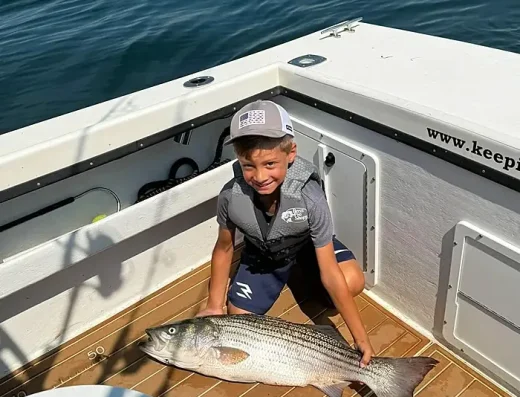
Wareham Fishing Guide
Wareham sits at the northeast corner of Buzzards Bay where river inflow, tidal movement, and warm southern water collide. This combination creates a predictable system: bait funnels out of the Weweantic and Wareham Rivers, tide sweeps it along Sippican Harbor and Marks Cove, and warm-water pushes from Rhode Island Sound energize bass, sea bass, and bluefish. Guides operating out of Wareham structure their trips around tide strength, water temperature, and the direction of bait flow.
Striped bass follow tide-driven lanes along the eastern shoreline. Early season sees bass staging at river mouths where herring and juvenile baitfish flush with outgoing tide. As water warms, bass slide onto the shallower flats and ledges around Stony Point and Great Hill. Incoming tide brings cleaner water, improving topwater options; outgoing tide tightens bait into deeper troughs where stripers sit low and feed on sand eels. Guides adapt by running precise drifts across breaks and adjusting jig weight to stay in the correct depth band.
Sea bass populate deeper edges and rock patches south of the Wareham entrance. They feed strongly during the first hour of moving water when scent dispersal aligns with manageable drift speed. Scup fill gravel patches and nearshore structure closer to the river mouth and provide steady action through summer. Bottom species require strict depth and angle control—charters keep rigs vertical and move only when drift changes push lines out of position.
Bluefish appear with warming inflow from Buzzards Bay. Their movement is tied to clean, warm water; when temperatures spike, blues push onto mid-bay shoals and chase bait aggressively. On murky or cool cycles, they slide deeper and respond better to metals and trolled spoons.
Wareham’s advantage is versatility. Protected rivers and coves allow fishing on windy days, mid-bay structure holds predators when the weather stabilizes, and short runs south place charters in prime summer sea bass and striper water. It’s a reliable port because bait, structure, and temperature breaks converge within minutes of departure, letting guides adjust quickly and keep anglers on fish without long travel.
Popular Fishing Areas
Weweantic River Mouth
A prime early-season striped bass zone. Herring and baitfish push out with outgoing tide, and bass sit on the first drop-off outside the river mouth. Incoming tide brings cleaner water and pushes school bass into the shallows where they chase small bait. Outgoing tide compresses bait into deeper seams, requiring jigs or soft plastics worked near bottom. Guides time passes based on tide strength—too strong and bait sweeps too fast; too weak and fish spread across the flat. Early morning offers the best surface activity before boat traffic increases.
Marks Cove & Sippican Harbor Edges
These protected coves and harbors create a stable inshore fishery for school stripers and scup. Incoming tide pulls saltier water across mud and sand flats, lifting bait and bringing bass onto transitions. Outgoing tide pushes predators back into the harbor channels. Guides favor slow drifts and light tackle here, working subtle contour changes where bait gathers. This zone is ideal when Buzzards Bay chop pushes boats into protected water.
Stony Point Ledges
A productive stretch of rocky edges and depth changes that hold stripers and sea bass. When tide begins to move, bait lifts across the top ledges, and bass rise to intercept. As flow intensifies, fish drop into deeper pockets along the contour. Sea bass sit tight to rock patches on the down-current side. Guides run angled drifts to keep jigs in the strike zone and use electronics to repeat productive lanes. The bite is strongest when incoming tide brings clean water from outer Buzzards Bay.
Great Hill Shoals
Shallow shoal lines that concentrate sand eels and small baitfish. Stripers work the edges on early morning incoming tide, taking topwater and soft plastics when clarity is high. As the sun gets higher, fish drop into deeper troughs. Bluefish roam these shoals during warm water surges, often giving visual surface feeds. Guides adopt a drift-and-cast pattern, adjusting lure weight as fish slide deeper through the tide cycle.
Mid-Bay Structure
Rock piles, gravel patches, and small ledges between Wareham and Marion hold sea bass, scup, and mixed stripers. These areas fire when tide strength is moderate and bait is stacked near bottom. On slack or overly strong tide, fish spread or pin deep, requiring drift adjustments. Guides focus on vertical jigging or bait rigs based on what electronics show, moving only when the drift pulls lines off productive marks.
Extended Target Zones
Long Beach Point
A shallow shoreline edge producing school stripers and seasonal bluefish. Incoming tide improves clarity and pulls bait over the sand. Outgoing tide compresses fish into deeper edges near the point. Ideal for light-tackle casting and reliable on southwest wind cycles.
Marion Harbor Mouth
A narrow funnel where tide accelerates and stacks bait. Stripers hold on bends and deeper cuts early morning. Works well on incoming tide when cleaner water flows through. Guides drift soft plastics along contour lines to stay in productive lanes.
Bird Island Area
Rocky structure outside Marion that holds sea bass, scup, and mixed bass. Strong tide lifts bait over rock patches; slack pushes fish deeper. Guides anchor or hover depending on current and keep presentations tight to bottom.
Onset Bay
Protected water with school stripers and flounder. Incoming tide brings saltier, clearer water that triggers feeding. Outgoing tide concentrates fish in channels. A safe fallback option during heavy southwest wind.
Fishing Seasons in Wareham
Spring
Striped bass push into Wareham’s river mouths chasing herring and early bait. Marks Cove and the Weweantic mouth fire early with school and slot fish. Sea bass push into deeper rock patches by late May. Bluefish arrive as warm water flows north. Guides work morning incoming tides for shallow bass, then shift to deeper edges as sun and boat traffic increase.
Summer
Peak activity for Wareham. Stripers feed along Stony Point, Great Hill, and nearshore shoals. Sea bass dominate deeper edges; scup fill gravel bottom. Bluefish roam mid-bay shoals during warm surges. Morning topwater windows are short but productive; mid-day action shifts deeper. Guides pivot between shallow casting, deeper jigging, and bottom programs based on tide and wind.
Fall
Cooling temperatures concentrate bait schools, triggering strong bass and bluefish feeds. Sea bass and scup stay active on deeper structure as long as water stays above 50 degrees. Outgoing tide becomes dominant as bait funnels out of rivers. Guides focus on structure circuits and deeper ledges until fish push out of the bay late in the season.
Winter
Most migratory fish have moved south or offshore. A few holdover stripers remain inside Onset and protected coves but are slow and deep. Bottom fishing slows as temperatures drop. Charters rarely run unless chasing limited holdover bass or taking advantage of rare calm-weather opportunities. Winter fishing revolves around short windows and heavy reliance on electronics.
Top Gamefish in Wareham
- Striped Bass – 5–40+ lbs Hold along ledges, shoals, and river mouths; strongest late spring–summer; taken on jigs, soft plastics, and live bait.
- Black Sea Bass – 1–5 lbs Sit tight to rock patches and deeper edges; strongest late spring–summer; taken on jigs and bait rigs.
- Scup (Porgy) – 1–3 lbs Hold on gravel and mixed bottom; strongest summer–fall; taken on bait rigs.
- Bluefish – 2–12 lbs Track warm-water surges; strongest summer; hit metals, plugs, and trolled spoons.
- Fluke – 2–10+ lbs Sit on sand transitions near drop-offs; strongest summer; taken on bucktails and drifting rigs.
Wareham Fishing FAQs
Best time for Wareham fishing charters?
Late spring through fall for stripers, sea bass, scup, and blues.
Are runs long?
No. Productive grounds are minutes from the harbor.
Does tide matter?
Yes. Every zone is current-dependent.
Beginner-friendly?
Yes—protected coves and steady scup fishing provide reliable action.
Do charters clean fish?
Yes—legal stripers, sea bass, and scup.
Can Wareham charters target mixed species?
Very easily. Structure variety provides consistent multi-species opportunities