
Bay Saint Louis Fishing Charters
Bay St. Louis fishing charters give anglers direct access to Mississippi Gulf Coast marsh drains, reefs, bridge structure, and Mississippi Sound waters holding redfish, speckled trout, and summer tripletail.
TrustedFish connects anglers with proven local captains in Bay Saint Louis—no commissions, no pay-to-play listings, no BS. Every charter on our platform is invite-only, vetted for skill, local knowledge, and reputation. If they’re listed, they’ve earned it.
Top Rated Charters in Bay Saint Louis
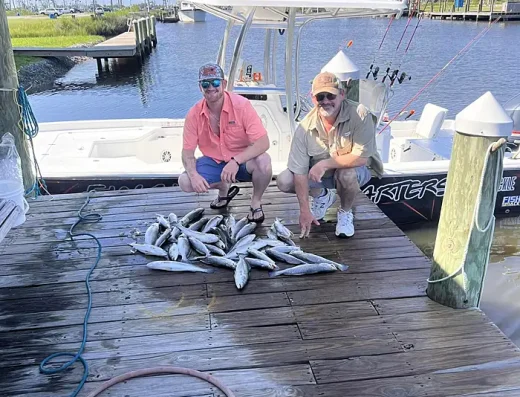
Bay Saint Louis Fishing Guide
Bay St. Louis fishing charters operate across a tide-driven fishery where water height, clarity, and wind shifts determine nearly every bite window. Local captains fish these marsh drains, bayous, reef lines, and bridge spans daily, tracking where clean green water meets stained river influence and where bait funnels through narrow cuts. Without this knowledge, DIY anglers waste hours drifting unproductive water. With a captain, you step directly into the highest-percentage lanes where redfish, trout, and drum feed as tide pushes forage through the system.
The advantage becomes even clearer on volatile days. A south wind may stack water onto shallow flats, opening redfish sight-casting opportunities, while the same wind pushes the Mississippi Sound clean enough for mid-bay trout. Meanwhile, a fast outgoing tide can expose shell, deepen current seams, or pull bait into predictable choke points. Charter captains read each shift, reposition before conditions change, and select the correct baits and angles to keep you on fish. Whether targeting marsh redfish, trout on reefs and pilings, or summer tripletail on buoy lines, Bay St. Louis fishing guides deliver fast, efficient access to the water that’s producing right now.
Popular Fishing Areas
Inshore Marsh & Bayou Network Inshore Marsh & Bayou Network
The inshore marsh system east of Bay St. Louis delivers year-round redfish and seasonal trout action. Narrow drains, shallow ponds, and mud-bottom bayous create precise tide funnels where shrimp and minnows flush during outgoing water. Reds stage at the first depth break or shell patch outside each drain, feeding aggressively when water movement is steady but not blown out. Incoming green water lifts trout into the same mouths when salinity stabilizes. Water height dictates access: high water opens flats for shallow cruising, while low water exposes edges and condenses fish. Captains work quietly through these zones, adjusting approach angles to keep baits in productive flow lanes.
Nearshore Reefs & Structure Belt
Reefs from Henderson Point toward Pass Christian anchor multi-species trips for trout, sheepshead, drum, and Spanish mackerel. Broken shell and man-made relief create micro-eddies where predators sit on the up-current face waiting for bait. Clean incoming tide lifts trout higher, making cork rigs and soft plastics effective, while cloudy or fast water pulls them lower where heavier jigs are required. Sheepshead and drum stay pinned to rock year-round, feeding on barnacles and crustaceans. Captains constantly adjust anchor position, drift lines, and casting angles so clients stay on the productive face of each reef instead of dragging through dead or snag-prone bottom.
Bridge, Harbor, & Channel Structures
The Bay St. Louis bridge spans, harbor breakwalls, and channel edges provide reliable depth, shade, and current breaks when open water becomes rough or cloudy. Trout feed on shadow lines and down-current sides of pilings where shrimp wash past. Reds and drum work the deeper edges and rock transitions surrounding the harbor. Winter concentrates fish here, with stable temperatures and reduced wind exposure keeping bait tight to structure. Sheepshead become a primary target in late winter and spring as they load onto pilings and breakwalls. Guides run short controlled drifts or hold bow-into-current to maintain precise bait placement along these vertical feeding lanes.
Mississippi Sound & Chandeleur Approach
On favorable weather, Bay St. Louis charters expand into the Mississippi Sound and toward the Chandeleur direction to target Spanish mackerel, larger trout, and bull reds along color lines and bait rips. This is open-water fishing dictated by water quality and surface life, not fixed spots. Clean green-blue bands, shrimp boats, bird activity, and sudden bait showers reveal active zones. Summer tripletail suspend under buoy lines, crab traps, and floating debris. Captains approach up-sun for visibility, present baits quietly, and drift productive rips or seams. This region offers semi-offshore action without the distance of a full bluewater run.
Extended Target Zones
High-Water West Marsh Ponds
South and southeast winds stack water deep into the west-side marsh pockets, opening shallow ponds typically inaccessible. Redfish push into these zones to feed on shrimp and small crabs along mud banks and scattered grass edges. The window is short: once wind or tide drops, water drains fast and fish retreat to main drains. Sight-casting becomes possible on calm days with stable light. Guides time their entries carefully to avoid grounding, move quietly to avoid blowing out fish, and pick off singles or pairs working each bank systematically.
Outer Bars on Late Falling Tide
Outer sand and shell bars at bayou and channel mouths become high-value targets during late falling afternoon tides. As bait exits the marsh, trout and reds position on the down-current edge where depth drops into the first trough. Clean, stable light enhances visibility for spotting slicks, bait showers, and subtle pushes. Captains run controlled drifts across these bars, repeating productive lines as tide accelerates, then tapers. The pattern produces predictable windows of strong action when water movement compresses forage into tight lanes.
Fishing Seasons in Bay Saint Louis
Spring
Spring stabilizes salinity and activates strong redfish and trout movement. Rising temperatures push bait into marsh drains and shallow flats, producing consistent redfish feeds on outgoing tide. Trout transition to mid-bay reefs, pilings, and channel edges where clean incoming water delivers forage. South wind often improves clarity along protected shorelines. Guides use controlled drifts and soft presentations to stay ahead of shifting clarity lines and daily temperature swings. Spanish mackerel begin showing along outer bars late in the season.
Summer
Summer pushes redfish into shaded marsh edges early and late in the day, while mid-day action shifts to reefs, breakwalls, and deeper structure. Tripletail become a premier target along buoy lines across the Mississippi Sound when water is calm and clear enough for sight-casting. Spanish mackerel, jacks, and bull reds roam outer bars and color lines when bait stacks along rips. Captains manage heat and storms by rotating between protected inshore zones and nearshore open-water structure.
Fall
Fall produces high-volume action as shrimp migrate out of the marsh and cooling water stabilizes clarity. Reds stack along drains and shallow edges, while trout school heavily on mid-bay reefs, bridge pilings, and harbor structure. Bait concentrates in predictable flow lanes on strong tide movement, creating short but intense feeding windows. Spanish mackerel and bull reds remain active on outer rips until early cold fronts shift water temperatures.
Winter
Winter compresses fish into deeper, more stable zones. Trout hold along deeper reef faces, bridge pilings, and harbor transitions where temperature swings are smaller. Redfish push into deeper bayous, mud-bottom pockets, and slow-flow drains. Clear cold mornings with moderate tide often produce the best bites. Guides slow presentations, increase weight, and rely on precise depth control to maintain contact with structure.
Top Gamefish in Bay Saint Louis
- Redfish – 5–20 lbs Powerful and steady fighters holding along marsh drains, mud edges, shell patches, and outer bars. Best on falling tide when bait concentrates. Reliable year-round with strong shallow opportunities during high water and calm light.
- Speckled Trout – 1–5 lbs Aggressive strikers that feed along reefs, pilings, and rips when clean incoming water moves bait. Rise in the column in clear conditions, drop deeper when turbidity increases. Peak action spring and fall.
- Tripletail – 5–20 lbs Hard-charging fish suspending under buoys, traps, and floating debris. Require precise sight-casts and soft landings. Strong vertical runs and sudden dives define the fight. Best in calm summer water.
- Black Drum – 5–40 lbs Heavy, dragging fighters holding tight to reefs, pilings, and channel edges. Feed on crabs, shrimp, and crustaceans. Very reliable in winter and during higher turbidity when trout scatter.
- Sheepshead – 2–8 lbs Structure-oriented fighters holding on harbor walls, pilings, and reef faces. Pinpoint feeders with strong initial runs. Peak late winter and early spring when they load onto hard structure.
- Spanish Mackerel – 1–4 lbs Fast, high-speed predators feeding along color lines, rips, and bait schools. Explosive strikes on spoons and jigs. Best in warm, clean water across the Mississippi Sound.
Bay Saint Louis Fishing FAQs
What species can I catch with Bay St. Louis fishing charters?
Redfish, speckled trout, sheepshead, black drum, Spanish mackerel, and summer tripletail.
Do tides matter here?
Yes. Tide direction and speed determine where bait moves and where predators set up. Most productive windows form on falling tide or clean incoming pushes.
Is this fishery beginner-friendly?
Yes. Captains handle boat control, bait placement, and structure positioning so clients focus on fighting fish.
When is the best time to fish Bay St. Louis?
Spring and fall offer the strongest multi-species action, summer delivers tripletail and Spanish mackerel, and winter concentrates trout and drum on deep structure.
Do I need my own gear?
No. Bay St. Louis charter captains provide rods, tackle, bait, and all required safety equipment.