
Atlantic City Fishing Charters
Atlantic City fishing charters run fast access to inlets, jetties, back-bay channels, and offshore wrecks holding striped bass, fluke, bluefish, tog, and seasonal tuna.
TrustedFish connects anglers with proven local captains in Atlantic City —no commissions, no pay-to-play listings, no BS. Every charter on our platform is invite-only, vetted for skill, local knowledge, and reputation. If they’re listed, they’ve earned it.
Top Rated Charters in Atlantic City
Atlantic City Fishing Guide
Atlantic City sits between Absecon Inlet and the back-bay network, giving charters two distinct fisheries: current-driven inlet structure and depth-driven offshore wreck lines. Guides structure every trip around tide speed, water temperature, and clarity—because fish here move constantly between bay, inlet, and nearshore ocean edges. Striped bass work the inlet walls, jetty tips, bridge shadows, and troughs where tidal compression stacks bait. Incoming tide brings cleaner water and pushes bass onto the rocks; outgoing tide pulls bait from the back bays and concentrates fish in narrow seams. Boat positioning is exact: a few feet off and the lure drifts out of the feeding lane.
Fluke dominate warm-water months. They sit on the edges of channels, sand ridges, and nearshore lumps. Tide direction determines where they hold—early incoming brings them shallow, while outgoing pushes them to down-current sides of structure. Guides run controlled drifts across edges, adjusting weight to maintain bottom contact without dragging. Wind against tide requires precise drift control or the fluke pull off the bait.
Bluefish roam the inlet and nearshore surf line, pushing bait onto shoals and sandbars. They respond immediately to moving water; when tide softens, they slide deeper and hit metals worked at speed. Tautog (tog) lock to rocks, jetties, and wrecks, feeding best on moderate incoming water when crab scent disperses correctly. Tog positioning is depth-specific—boats anchor or lock into the exact relief point to maintain vertical baits.
Offshore grounds begin quickly south of Atlantic City. Wrecks and reefs in 50–120 feet produce sea bass, ling, tog, fluke, and the occasional cod. Farther out, the midshore and canyon edges hold bluefin, yellowfin, mahi, and billfish. Guides watch temperature breaks and clean water pushes; tuna show reliably when a warm eddy presses tight to structure. Seas, swell period, and wind dictate how far offshore a charter can run, but Atlantic City’s layout allows productive short trips even in moderate conditions.
Back-bay fishing is its own system. Channels behind Brigantine, Broad Thoroughfare, and the Absecon marsh lanes hold summer fluke, weakfish, blues, and schoolie stripers. Light-tackle guides work moving water over sod banks, shell beds, and deep holes, adjusting positioning every few minutes based on bait movement.
Atlantic City fishing charters remain commercially strong because productive water begins minutes from every marina, and guides can mix inlet, bay, wreck, and offshore routes based on weather and client goals. There is no downtime window—something always fishes.
Popular Fishing Areas
Absecon Inlet
The inlet is the backbone of Atlantic City fishing. Strong tidal flow pushes bait across jetty ends, bridge pilings, and rock walls, drawing stripers, blues, and tog year-round. Incoming tide brings clean ocean water that lifts bass into the rocks, while outgoing tide pulls bait from the marsh and concentrates fish in the channel edges. Tog bite hard on crab baits dropped vertically into the relief pockets. Striped bass respond to live eels, plugs, and soft plastics worked along the shadow lines. Guides key on tide strength—too fast and baits sweep out of lane; too slow and fish spread across the structure.
Brigantine Back Bays
A shallow, winding marsh network holding fluke, weakfish, schoolie stripers, bluefish, and summer drum. Outgoing tide pulls shrimp and baitfish off the sod banks, forming clear seams where fish feed. Fluke sit on deeper edges of channels, while weakfish hold in depressions and slower pockets. Stripers push into shallow cuts on incoming tide under low light. Guides use light-tackle setups, drifting live bait or small jigs with the current. Water clarity shifts fast with wind direction, and captains move frequently to stay in lanes with steady bait movement.
The Jetties & Rock Walls
Atlantic City’s jetty system provides constant structure for stripers, blues, and tog. Working the ocean-side rocks on incoming tide produces the cleanest visibility, giving bass a longer strike window. Outgoing tide creates turbulent seams and pushes fish slightly deeper. Tog sit tight to hard structure and require perfect vertical placement. Blues roam the outside edges and attack topwater or metals when bait pushes in. Guides use bow-control approach angles to keep baits sliding parallel to structure instead of dragging into rocks.
Nearshore Reef Complex
Reefs and wrecks 3–10 miles offshore hold fluke, sea bass, tog, ling, and occasional cod. Depth and drift speed drive the bite. Fluke sit on the up-current faces of rubble piles; sea bass hold higher when current softens. Tog stay tight to the densest structure. Guides run slow-controlled drifts or anchor depending on target. Temperature swings from ocean currents influence species mix; warm pulses push fluke shallow, while cooler cycles strengthen the sea bass bite.
Canyon & Midshore Lines
Farther offshore, temperature breaks and clean-blue edges draw tuna, mahi, and billfish into range. Bluefin appear on midshore lumps; yellowfin ride edges of warm eddies. Mahi gather near pots, debris, and weedlines. Guides monitor SST charts and run spreader bars, ballyhoo, or jigs depending on fish position in the column. Calm seas produce the longest windows; swell from the southeast shortens runs and pushes boats into safer midshore zones.
Extended Target Zones
Great Egg Harbor Bay
Great Egg Harbor Bay gives you a softer-current option compared to the inlet and ocean front, which is why fluke and weakfish stack here on the right tides. Rising tide pulls cleaner ocean water across the flats and channel edges, lifting bait off the bottom and creating consistent drift lanes. Fluke sit on the down-tide lip of drops, while weakfish hold in slightly deeper pockets just off the edge. On outgoing tide, fish slide into the deeper troughs and respond better to slower, heavier presentations. Guides run controlled drifts along contour changes, constantly adjusting weight and speed to keep baits ticking bottom instead of dragging or riding too high.
Broad Thoroughfare Marsh Cuts
Broad Thoroughfare and the connecting marsh cuts behind Atlantic City form a deeper back-bay network where current compresses bait without full inlet velocity. Stripers work tight to sod banks and cut mouths on low-light incoming tides, using small depth breaks and undercut edges to ambush mullet and shrimp. During warm months, fluke hold along the ledges at the base of these banks, especially where two flows intersect. Outgoing tide pulls bait out of the side creeks and funnels it into the main cut, creating short but intense feeding windows. Guides set the boat just off the seam and cast slightly up-current, letting baits sweep naturally through the strike zone instead of dragging across it.
Little Bay
Little Bay is a sheltered option when wind or inlet swell makes the main channel uncomfortable. Fluke, small blues, and schoolie stripers all use the modest channel edges and scattered structure here. Because tide flow is weaker than in the main inlet, presentations must be cleaner: just enough weight to maintain bottom contact, but not so much that rigs plow and spook fish. Rising tide brings slightly cooler, clearer water into the bay and bumps activity along the edges. Outgoing tide concentrates fish in the deeper center lane. Guides favor lighter jigs, soft plastics, and compact bait rigs to stay effective in this lower-energy environment.
AC Reef 11
AC Reef 11 is a quick-run nearshore reef that consistently holds sea bass, keeper fluke, and seasonal tog. The structure is varied enough that current direction really matters: one side will fish far better depending on how water hits the relief. On stronger tides, sea bass and fluke push to the up-current face where food lifts off the bottom; on slack or weak flows, they spread over the top and demand more searching. Tog stay locked into the gnarlier pieces and require true vertical drops with crab baits. Guides watch drift angle closely and reposition whenever lines stop tracking straight over the chosen piece.
Fishing Seasons in Atlantic City
Spring
Striped bass return as water warms. Incoming tide over the inlet rocks produces consistent action. Weakfish and blues appear in the bays, and fluke season opens on channel edges. Guides work plugs, soft plastics, and live bait for early bass, shifting to drift fishing for fluke once water stabilizes. Warm south wind improves back-bay clarity and lengthens feeding windows.
Summer
Peak mixed-bag season. Fluke dominate the bay and nearshore structure; sea bass fire on deeper reefs; blues roam inlet seams. Tripletail appear around pots and buoys offshore. Offshore tuna runs develop when warm eddies push west. Heat pushes fish deeper mid-day, so early departures produce best. Guides move between bay, inlet, and reefs to match tide and clarity.
Fall
Cooling water triggers strong striped bass migration along beaches and inlet structure. Blues remain active, and tog return heavily to rocks. Fluke taper off but remain on deeper structure early fall. Offshore mahi and tuna stay active until temperature breaks collapse. Guides focus on inlet and jetty patterns, where bait compresses into tight lanes on outgoing tide.
Winter
Cold conditions push most predators to deep structure. Tog remain the primary target, feeding along jetty ends and offshore wrecks. Calm days allow runs to deeper reefs for sea bass and ling. Stripers hold in deeper inlet pockets but feed in short windows. Water clarity improves under northwest wind, but cold temperatures shorten trips. Guides rely on precise bottom contact and slow, tight presentations.
Top Gamefish in Atlantic City
- Striped Bass – 5–35+ lbs Hold along inlet walls, jetty tips, and bridge shadows; strongest spring and fall. Feed aggressively during moving water and clean incoming tides. Taken on plugs, eels, soft plastics, and live bait.
- Fluke (Summer Flounder) – 1–10 lbs Sit on channel edges, sand ridges, and wreck faces; strongest summer. Respond to precise bottom contact; taken on bucktails, drifting rigs, and Gulp baits.
- Bluefish – 1–12 lbs Roam inlet seams and nearshore bars; strongest late spring–fall. Hit metals, plugs, and fast-moving baits when bait concentrates.
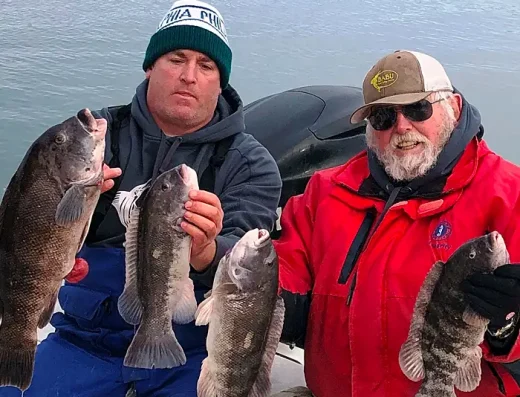
- Tautog (Blackfish) – 2–10+ lbs Hold tight to rock, jetties, and wrecks; strongest fall–spring. Require vertical crab baits placed directly into relief.
- Sea Bass – 1–4 lbs Stack on deeper reefs; strongest late spring–fall. Taken on jigs and bait rigs kept above structure.
- Bluefin / Yellowfin Tuna – 30–150+ lbs Track temperature breaks offshore; strongest summer–fall. Taken on trolled ballyhoo, spreader bars, and jigs.
Atlantic City Fishing FAQs
Best time for Atlantic City fishing charters?
Spring and fall for stripers; summer for fluke, sea bass, reefs, and offshore tuna.
Are runs long?
No. Inlet, bay, and reefs are minutes away; offshore runs vary by break position.
Does tide matter?
Yes. Inlet fishing is completely tide-driven.
Beginner-friendly?
Yes—fluke, sea bass, and bay trips offer steady action.
Do charters clean fish?
Yes—fluke, sea bass, tog, and other legal species.