
Maiden Fishing Charters
Maiden fishing charters give anglers direct access to Lake Norman’s main-lake points, river-run channels, dock lines, and bait-driven coves where striped bass, largemouth bass, catfish, crappie, and spotted bass feed year-round.
TrustedFish connects anglers with proven local captains in Maiden —no commissions, no pay-to-play listings, no BS. Every charter on our platform is invite-only, vetted for skill, local knowledge, and reputation. If they’re listed, they’ve earned it.
Top Rated Charters in Maiden
Maiden Fishing Guide
Maiden fishing charters operate primarily on Lake Norman, a large Catawba River reservoir where water temperature, bait movement, and seasonal oxygen shifts determine fish location every day. This lake changes fast—bait pushes into creek arms overnight, striped bass migrate with wind-driven surface currents, and bass reposition along points or docks as light conditions shift. DIY anglers often waste hours running unproductive stretches because these patterns can move several hundred yards in less than a day. Local guides remove the guesswork by tracking bait schools, thermocline depth, and daily pressure zones so clients start directly on feeding fish.
Lake Norman’s mixed-species nature demands adaptive strategies. Stripers roam open water and channel edges in search of blueback herring and shad, while spotted bass feed aggressively along rock, brush, and offshore humps. Crappie shift between brush piles, bridge pilings, and deeper creek turns depending on season. Catfish follow predictable contour transitions where current, depth, and forage align. Maiden fishing guides use sonar, forward-facing imaging, and precise boat positioning to match each bite window, adjusting speed and presentation to keep anglers on the productive side of the structure. This turns a highly technical reservoir into a consistent, controlled fishing experience.
Popular Fishing Areas
Main-Lake Points & Humps
Main-lake structure holds striped bass, spotted bass, and seasonal largemouth. Wind direction pushes bait onto one side of each point, determining which edges activate. Submerged humps create vertical feeding lanes where stripers ambush shad, while spotted bass sit on rock and brush in 15–30 feet. Clear water pushes fish deeper; stained water brings them higher in the column. Guides watch sonar closely to stay aligned with moving bait schools, shifting locations quickly when predators slide to nearby shelves or contour lines.
Creek Arms & Feeder Coves
Creek arms around Maiden warm early in spring and concentrate bait in fall, making them prime zones for largemouth, spotted bass, and crappie. Bait movement dictates the bite—shad push into coves overnight, drawing predators onto shallow flats at dawn before retreating to mid-depth brush later in the day. Crappie stack on submerged timber, bridge pilings, and brush piles depending on temperature. Guides adapt by switching between casting, vertical presentations, and slow-trolling to match fish depth and movement as light and wind conditions shift.
River-Run Channels
The upper Catawba River segment feeding Lake Norman offers cooler water, stronger current influence, and consistent striper and catfish movement. Stripers follow bait along channel turns and deeper cuts, rising in the column when current softens. Catfish use bottom transitions where sand, rock, and mud meet. Increased flow from rainfall or discharge regularly reshapes holding zones. Guides monitor current speed, channel bends, and depth changes, adjusting drift speed and spread placement to track migrating fish.
Dock Lines & Marina Structure
Dock systems around Maiden create shade, vertical cover, and depth transitions that hold largemouth, spotted bass, and crappie. Bass position based on sun angle, water clarity, and bait presence—shallow under low light and deeper on sunny, high-pressure days. Brush piles placed near docks serve as consistent holding structure. Crappie sit suspended in shade pockets or just above brush, depending on season. Guides target specific docks based on angle, depth, and adjacent structure rather than fishing large runs blindly.
Extended Target Zones
Rocky Creek Mid-Lake Bend
Mountain Creek Flats
Mountain Creek’s shallow flats warm early and attract largemouth, crappie, and roaming stripers. Wind determines productivity—strong north or south winds push bait onto specific shorelines, creating predictable feeding windows. Largemouth hunt along scattered brush and dock edges, while stripers sweep the flats early before sliding into deeper pockets. Guides use fast relocation patterns to stay ahead of shifting bait schools across this broad, variable zone
Spring
Spring warming pushes bait into creek arms and shallow coves, triggering strong largemouth and spotted bass feeding. Crappie move into pre-spawn staging areas near brush and docks, then transition shallow when temperatures peak. Stripers follow shad migrations along main-lake points and river-run edges. Wind shifts frequently change clarity and bait distribution, requiring guides to adjust locations daily. This is one of the most consistent multi-species periods of the year.
Summer
Summer stratifies Lake Norman, making thermocline depth crucial. Stripers suspend along channels and deep points, feeding early and late before dropping lower as heat rises. Spotted bass hold in brush piles, rocky transitions, and deep humps. Catfish feed steadily along mid-depth contours, especially during dusk and night. Guides rely heavily on electronics to track moving bait schools and adjust depth control as temperatures climb.
Fall
Fall is defined by massive shad pushes into creek arms, drawing largemouth, spots, and stripers into shallower water. Surface activity increases, with schooling fish chasing bait on windy banks. Crappie shift from open-water brush to deeper wintering areas. Guides move frequently between creek pockets, mid-lake points, and open-water bait concentrations to follow rapid daily changes in fish positioning.
Winter
Winter concentrates striped bass and spotted bass along channel edges and deep structure. Cold clear water increases visibility and requires precise depth control. Crappie form large, predictable schools near brush piles and bridge pilings. Catfish feed steadily in deeper cuts and along steep breaks. Guides focus on slow presentations, electronics-driven positioning, and maintaining baits within narrow temperature-stable depth bands.
Top Gamefish in Maiden
- Striped Bass – 5–15 lbs Roam main-lake points, channels, and open-water bait schools. Hard runs and strong headshakes. Best early and late or when wind pushes bait against structure.
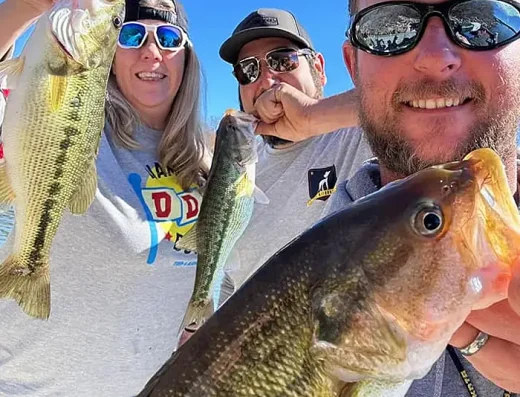
- Largemouth Bass – 1–6 lbs Hold on docks, brush, shallow cover, and wind-driven points. Strong jumps and surges. Most active during spring warming and fall shad pushes.
- Spotted Bass – 1–4 lbs Aggressive fish on rock, brush, and mid-depth humps. Fast strikes and vertical fights. Peak action in stable summer and fall conditions.
- Crappie – 0.5–2 lbs School tightly on brush piles, docks, and creek turns. Light bite with quick bursts. Strong seasonal shifts between shallow spawning zones and deep winter structure.
- Blue Catfish – 5–30 lbs Powerful bottom fighters holding on deep contours, channel turns, and current seams. Feed consistently year-round, especially at night.
- Channel Catfish – 2–10 lbs Work mid-depth flats, points, and soft-bottom transitions. Steady pull and rolling fight. Most active during warmer months.
Maiden Fishing FAQs
What species can I catch with Maiden fishing charters?
Striped bass, largemouth bass, spotted bass, catfish, and crappie depending on season and water temperature.
Do I need experience to fish Lake Norman?
No. Guides handle electronics, positioning, and presentations so beginners can focus solely on catching fish.
When is the best time to fish Maiden, NC?
Spring and fall offer the strongest multi-species patterns, summer is best for deep stripers and spotted bass, and winter provides concentrated structure fishing.
Do charters provide all gear?
Yes. Rods, reels, tackle, and safety equipment are supplied. Some offer live bait or artificial-only trips based on conditions.
Are electronics important on this lake?
Yes. Lake Norman is bait-driven; guides rely on sonar and forward-facing imaging to track fish movement hourly.