
Grand River Fishing Charters
Grand River fishing charters give anglers direct access to Lake Erie nearshore structure, tributary current seams, deep channel cuts, and seasonal migration routes holding steelhead, walleye, smallmouth bass, and freshwater drum.
TrustedFish connects anglers with proven local captains in Grand River —no commissions, no pay-to-play listings, no BS. Every charter on our platform is invite-only, vetted for skill, local knowledge, and reputation. If they’re listed, they’ve earned it.
Top Rated Charters in Grand River
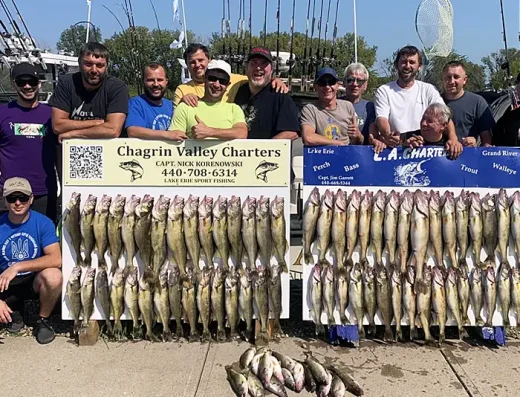
Grand River Fishing Guide
Grand River fishing charters operate across a mixed river–lake system where water level, clarity, temperature, and rainfall dictate major shifts in fish location. The Grand River itself changes dramatically with runoff: a storm can push it high and muddy overnight, while stable weather creates clean flow that pulls steelhead upstream and concentrates smallmouth in predictable current seams. Lake Erie nearshore waters influence the river mouth daily—east or west winds move warm and cold water against the shoreline, altering clarity and pushing bait into or out of the estuary. DIY anglers often struggle because the fishery changes with every weather pattern. Local guides remove the uncertainty by reading river stage, ice-out progression, wind impact, and clarity lines in real time.
The system fishes differently throughout the year. Steelhead dominate spring and fall, running the lower river when flow and temperature align. Smallmouth bass feed aggressively along ledges, boulders, and shoreline rock as water warms, while walleye move along nearshore contours during post-spawn and fall migrations. Summer brings mixed action for drum, catfish, and bass in both the river and nearshore edges. Grand River fishing guides use depth control, drift management, and precise lure or fly selection to match daily conditions, ensuring anglers fish the productive side of the structure rather than covering dead water.
Popular Fishing Areas
Lower Grand River and Mouth
The lower Grand River and its mouth form the primary access point for steelhead, walleye, and smallmouth as river flow combines with Lake Erie’s shoreline currents. Clean, cold water pushes steelhead into deeper runs, while warming conditions position smallmouth along boulders, undercut edges, and current seams. Walleye move through the estuary during transitional periods, feeding along channel drops and deeper bends where bait collects. Guides judge fish placement by tracking river stage, temperature, and clarity because slight changes shift feeding lanes significantly. This is a highly reactive zone where anglers must match depth, drift speed, and lane selection with precision.
Middle River Pools and Riffles
Mid-river sections contain well-structured flows with alternating pools, riffles, and gravel runs that draw steelhead and smallmouth throughout the year. Steelhead hold in slower edges and deep pockets during higher flows but spread into transitional water when flows stabilize. Smallmouth occupy similar terrain in warm seasons, positioning along boulders, mid-depth shelves, and soft seams where insects and small forage accumulate. Water temperature is the main behavioral trigger, with small spikes determining whether fish hold deep or feed actively in faster water. Guides select beats where flow, clarity, and depth combine to create predictable feeding lanes that support natural presentations.
Lake Erie Nearshore Contours
Nearshore waters east and west of the Grand River mouth support post-spawn walleye, summer drum, and strong smallmouth patterns. Wind direction sets the clarity and determines which side of the river mouth activates. Clean water invites smallmouth onto rock transitions and breaklines, while stained conditions push them slightly deeper. Walleye follow bait along contour edges and temperature lines, especially during early and late season migrations. Guides study surface temperatures, clarity streaks, and bait concentrations to position anglers correctly. Productive days rely on matching lure depth and speed to the precise water column where fish are feeding rather than covering water blindly.
Rock Piles and Shoal Complexes
Rock piles, gravel pockets, and shoals scattered across the nearshore zone create consistent ambush structure for smallmouth and seasonal walleye. These areas collect bait when current and light conditions align, attracting predators to narrow high-percentage pathways. Clear water keeps fish deeper, while stained conditions pull them higher into striking range. Drum and catfish move through the same areas during stable summer periods. Guides work these structures using controlled drifts or spot-lock precision so presentations move across the productive edge rather than drifting into unproductive flats or soft-bottom zones. This region rewards accuracy, timing, and exact bottom contact.
Extended Target Zones
Hogback Ridge Area
The upstream Hogback Ridge area offers cooler, structured water that performs well for steelhead when flows stabilize after rain events. Pools, cutbanks, and gravel transitions create holding zones that shift depending on temperature and clarity. Steelhead position deeper during faster flows and slide into shallower holding water once conditions soften. In warm seasons, smallmouth transition into these same pools and rock shelves, feeding along seams and undercut banks. Guides adjust between drift, jig, and fly presentations depending on current speed and water color. Success relies on matching presentation weight and angle to the exact depth where fish rest or feed.
Ashtabula to Fairport Nearshore Line
The nearshore corridor stretching from Ashtabula to Fairport is a consistent alternative when Grand River conditions degrade. This stretch offers stable clarity, predictable contour lines, and steady bait concentrations that attract migrating walleye and active smallmouth. Thermal pockets form along subtle depth changes, drawing fish into defined paths that can hold for several days when weather remains stable. Guides run long trolling passes or targeted casting patterns depending on how bait distributes across the zone. This region provides reliable fishing when river flows rise or nearshore wind shifts reduce visibility at the Grand River mouth.
Fishing Seasons in Grand River
Spring
Spring brings steelhead into the Grand River as flows stabilize after snowmelt and temperatures climb into the optimal low to mid 40s. Clean green water is the primary trigger, pushing fish into deep pools, cutbanks, and soft-current edges where they hold ahead of flow changes. Slight shifts in clarity or temperature can reposition entire groups of fish within minutes. Smallmouth begin sliding toward rocky transitions and mid-depth shelves as water warms. Walleye move along nearshore contour lines during post-spawn staging and feed heavily when bait collects along breaks. Guides monitor river stage, runoff timing, and clarity bands to place anglers in the most active feeding lanes.
Summer
Summer activates smallmouth across rock piles, boulder edges, and nearshore shoals where insects and baitfish concentrate in warm, stable water. Walleye suspend along deeper nearshore contours, responding to temperature layers that form predictable feeding bands. Drum and catfish remain active in deeper river holes and along soft-bottom transitions, especially during sustained heat. Clarity becomes the controlling variable, with calm weather producing strong visibility and surface activity while storms create short-term mudlines that push fish deeper. Guides adjust lure depth, presentation speed, and drift angle to match shifting light penetration and temperature gradients across the river and nearshore zones.
Fall
Fall initiates major steelhead movement as surface temperatures cool and rainfall increases river flow. Early runs hold near the mouth, then progress into lower and middle river sections where deep pools and structured seams provide stable holding water. Smallmouth feed aggressively ahead of passing cold fronts, concentrating around rocky ledges, boulders, and current breaks. Walleye return to nearshore contour lines as bait migrates east and west with temperature shifts. Guides slow presentation speed and refine drift control to match cooling water behavior since fish often feed in narrow windows when temperature, clarity, and flow align precisely.
Winter
Winter concentrates steelhead in deep, slow-moving sections of the Grand River where stable temperatures and reduced flow create reliable holding water. Clear winter conditions demand long, natural drifts and lighter presentations because fish become highly selective. Slight warmups or flow bumps can activate steelhead and reposition them within pools. Nearshore Lake Erie can remain productive for walleye when weather allows, especially during calm, high-pressure periods when bait holds along deeper edges. Guides rely on precise weight adjustments, accurate depth placement, and careful beat selection to maintain consistent contact with winter fish that conserve energy and feed selectively.
Top Gamefish in Grand River
- Steelhead – 4–12 lbs Hold in deep pools, seams, and soft-current edges. Fast runs and acrobatic jumps. Peak in fall and spring during stable flows.
- Walleye – 2–10 lbs Travel nearshore contours and migrate seasonally. Strong headshakes and steady pulls. Best during post-spawn spring and late-summer offshore patterns.
- Smallmouth Bass – 2–6 lbs Hold on rock piles, shoals, and river ledges. Aggressive strikes with vertical fights. Active from late spring through fall.
- Freshwater Drum – 2–15 lbs Feed along deep edges and nearshore rock. Heavy, rolling fight. Consistent warm-season target.
- Channel Catfish – 2–12 lbs Hold in deeper river bends and nearshore soft-bottom pockets. Steady, powerful pull. Active in warm and stable water.
Grand River Fishing FAQs
What species can I catch with Grand River fishing charters?
Steelhead, walleye, smallmouth bass, freshwater drum, and catfish depending on season and conditions.
Is Grand River good for beginners?
Yes. Guides handle drifts, depth control, and water reading, which are critical in changing river and lake conditions.
When is the best time to fish Grand River?
Spring and fall for steelhead, summer for smallmouth and walleye, and late summer for mixed nearshore action.
Do charters supply gear?
Yes—rods, tackle, safety equipment, and all specialized river or trolling gear.
What affects fishing most here?
Clarity, flow rate, wind direction, and temperature shifts determine where fish hold and how they feed.