
Tigard Fishing Charters
Tigard fishing charters give anglers quick access to the Tualatin River, Willamette River, and nearby Columbia River fisheries where salmon, steelhead, and sturgeon run through the region.
TrustedFish connects anglers with proven local captains in Tigard —no commissions, no pay-to-play listings, no BS. Every charter on our platform is invite-only, vetted for skill, local knowledge, and reputation. If they’re listed, they’ve earned it.
Top Rated Charters in Tigard
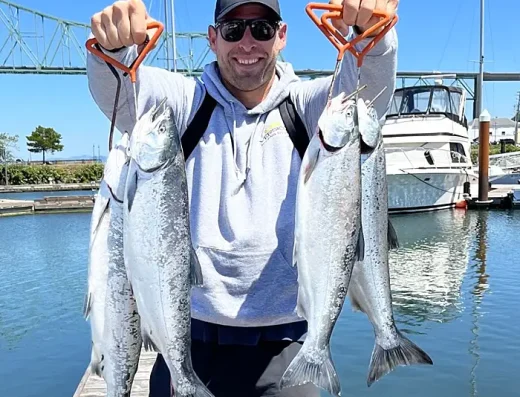
Tigard Fishing Guide
Tigard sits close to some of the most productive inland fisheries in Oregon. While the Tualatin River itself is a smaller system, it feeds directly into the Willamette, which then connects to the Columbia. This gives local anglers access to salmon, steelhead, sturgeon, and warmwater species throughout the year. Spring Chinook use the lower Willamette as a major travel route, staging along edges, channel shifts, and deeper troughs before pushing farther upriver. Fall Chinook and coho do the same, responding quickly to clarity changes and tide influence. Understanding where fish hold on any given day takes local experience, because depth, flow, and travel lanes shift often.
The Tualatin also offers seasonal opportunities for warmwater fishing, with bass, crappie, and panfish holding in slower stretches, log jams, and soft-bottom pockets. These smaller zones require precision casting rather than big-water trolling.
Sturgeon fishing remains a major draw. These fish move between the Willamette and Columbia based on current speed and bottom type. Getting bites requires anchoring in the correct lane and keeping baits steady on the bottom. Tigard fishing guides track clarity, tide timing, flow levels, and bait movement between the connected rivers to put anglers on the most productive water. With experienced guides, Tigard becomes a gateway to big salmon, powerful steelhead, and some of the best sturgeon action in the Pacific Northwest.
Popular Fishing Areas
Lower Tualatin River
The lower Tualatin River offers quiet, structure-rich water for warmwater species and seasonal access to migratory fish near its confluence with the Willamette. Bass hold along logs, cutbanks, and slower bends where shade and structure create ambush points. Summer clarity improves the bite and draws fish into shallow edges early in the day. During fall rains, flow increases and positions bass slightly deeper. Though salmon do not run far into the Tualatin, fish staging near the confluence may briefly travel into the lower section. Guides focus on controlled casting angles, slower retrieves, and precise placement near structure.
Lower Willamette River Access
Just minutes from Tigard, the lower Willamette delivers strong runs of spring Chinook, fall Chinook, and coho. These fish travel along channel edges, bridge pilings, and deeper troughs as they move upriver. Tide cycles from the Columbia influence current speed, pushing salmon higher in the water column on rising water and deeper during ebb. Clarity is the main determining factor for bite quality. Clean water produces predictable travel routes, while green or stained water pushes fish into seams and protected pockets. Guides run slow, controlled trolling passes to keep baits in the travel lanes that consistently produce fish.
Columbia River Connection
The Columbia River sits a short drive from Tigard and expands fishing opportunities for salmon, steelhead, and sturgeon. These species use deep channels, seams, and edges as major migration corridors. When the river runs high, salmon push along inside bends and protected contours. When clarity improves, fish spread across deeper lanes. Sturgeon remain consistent year-round, holding in troughs and soft-bottom pockets. Guides choose between trolling and anchoring depending on target species and conditions. The Columbia is a fast-changing system, and Tigard charters rely on local knowledge to stay ahead of flow shifts, tide influence, and clarity changes.
Multnomah Channel Access
Multnomah Channel is a reliable alternative when the main rivers get too fast or too dirty. It draws spring Chinook, fall salmon, and sturgeon into narrow, predictable lanes where current slows and clarity often improves. Salmon hold along edges, bends, and deeper holes depending on tide direction. Clean water brings fish shallower and increases surface activity, while stained water pushes them deeper. Sturgeon feed along soft-bottom pockets throughout the year. Guides run slow trolling passes that match tide direction or anchor in productive lanes for sturgeon, ensuring baits track naturally through the areas fish use most.
Extended Target Zones
Willamette Falls to Oregon City
A short drive from Tigard, salmon stack below Willamette Falls during spring and fall migrations. Spring Chinook in particular gather along rock shelves, ledges, and deep pockets as they wait for the right flow to move upstream. Bite windows depend on clarity, temperature, and tide influence from the lower river. Summer steelhead also move through the region and hold where cooler water collects. Guides run slow upstream trolling or controlled back-trolling, adjusting depth and speed to keep baits in narrow travel lanes. This zone is extremely productive when water levels stabilize.
Sauvie Island and Confluence Waters
Sauvie Island sits at the intersection of multiple productive salmon lanes and sturgeon travel routes. Incoming tide carries clean water toward the island edges, drawing salmon tight to the banks and along channel edges. Outgoing tide pushes fish deeper and concentrates them near structure. Sturgeon feed throughout the area, following scent and softer current zones. Clarity shifts quickly, often changing where fish travel within a single tide cycle. Guides reposition based on bait marks, temperature lines, and pressure changes to keep baits in front of active fish during short feeding windows.
Fishing Seasons in Tigard
Spring
Spring opens with strong runs of spring Chinook moving through the Willamette and Columbia. Fish respond to clarity, flow, and tide timing, with clean water producing the best travel lanes. Tigard is perfectly positioned for quick access to productive stretches where salmon pause or travel in pulses. Sturgeon fishing is excellent during this season as well, with fish stacking in deeper channels affected by runoff. Guides use precise depth control and slow trolling for salmon and stable anchor setups for sturgeon. Bite windows often appear around clarity changes or tide transitions, making timing a major advantage.
Summer
Summer brings warmwater action on the Tualatin for bass and panfish, while salmon begin staging offshore and near the Columbia. Steelhead offer added opportunity in seams and mid-depth travel lanes. Sturgeon remain active in deep troughs throughout the season. Stable weather improves water clarity and allows long trolling passes on the Willamette and Columbia. Guides adjust lure speed, depth, and presentation style to match fish movement as temperatures rise. Morning and evening typically offer the strongest action, especially during calm, stable stretches.
Fall
Fall is peak salmon season in the Tigard region. Chinook and coho push through the Willamette, Columbia, and Multnomah Channel in strong waves that follow tide timing and clarity bands. Flood tide brings fish upriver quickly, while ebb tide often stacks fish near confluence points and deeper edges. Sturgeon continue feeding through fall, especially as temperatures cool. Guides refine their trolling speed, adjust lure depth, and reposition frequently to stay on moving schools. Fall fishing is consistent, fast-paced, and often produces some of the biggest salmon of the year.
Winter
Winter focuses on sturgeon, which gather in deep channels with stable temperatures and softer current. Cold water sharpens clarity and makes scent presentation more important. Salmon and steelhead opportunities are limited but possible during calm weather windows in protected stretches. Guides anchor in known sturgeon lanes and adjust weight and bait placement as flow changes. Winter fishing is slower paced but offers excellent chances at oversized sturgeon for anglers looking for a powerful fight in quiet conditions.
Top Gamefish in Tigard
- Chinook Salmon – 10 to 35 lbs Strong, heavy fighters that travel through the Willamette, Columbia, and Multnomah Channel. Peak in spring and fall during major migration waves.
- Coho Salmon – 5 to 12 lbs Fast, aggressive fish that follow clean water and bait. Active in late summer and fall with strong surface behavior.
- Steelhead – 4 to 12 lbs Aerial, fast-moving fish that hold along seams and cool water lanes. Present in both summer and winter runs.
- White Sturgeon – 20 to 200 lbs Powerful bottom-oriented fish that occupy deep channels and troughs year-round. Known for long, heavy fights.
- Largemouth Bass – 1 to 5 lbs Hold in slower Tualatin stretches around wood, shade, and soft edges. Active in warm seasons with strong topwater potential.
Tigard Fishing FAQs
What species can I catch with Tigard fishing charters?
Chinook, coho, steelhead, sturgeon, bass, and seasonal warmwater species.
How far is the fishing from Tigard?
Most productive water is 10 to 25 minutes away on the Willamette, Tualatin, or Columbia.
When is the best time to fish Tigard?
Spring and fall for salmon, winter and spring for sturgeon, summer for warmwater species.
Do guides provide gear?
Yes. All tackle, rods, and safety equipment are included.
Is the fishing tide influenced?
Yes. Both the Willamette and Columbia respond to tide cycles, especially during salmon season.