
New Shoreham Fishing Charters
New Shoreham fishing charters put anglers into Block Island’s world-class striped bass, bluefish, fluke, and offshore tuna grounds, with fast access to rips, reefs, and deep-water edges surrounding the island.
TrustedFish connects anglers with proven local captains in [New Shoreham—no commissions, no pay-to-play listings, no BS. Every charter on our platform is invite-only, vetted for skill, local knowledge, and reputation. If they’re listed, they’ve earned it.
Top Rated Charters in New Shoreham
New Shoreham Fishing Guide
New Shoreham, better known as Block Island, sits inside one of the richest fisheries on the East Coast. Tidal rips, reefs, shoals, sand edges, and deep-water drop-offs surround the island in every direction. This concentrates bait and predators year-round. Striped bass stack on rips and current breaks where water pushes over structure, creating perfect feeding lanes. Bluefish mix in heavily during summer and fall. Fluke gather around sand edges, humps, and transitions where squid and small baitfish settle. Offshore, warm-water pushes bring yellowfin, bluefin, and occasional mahi close enough for nearshore runs when the weather cooperates.
Everything around Block Island revolves around tide and bait. A rip that is slow and quiet one hour can erupt with fish once tide speed increases. Bass slide up onto shoals during slower water, then drop into deeper channels when current picks up. Fluke shift between sand edges and deeper holes depending on clarity and light levels. Tuna move along temperature breaks that swing in daily. Because these patterns change fast, a local charter is essential.
New Shoreham fishing guides read tide direction, bait movement, drift speed, and clarity to place anglers directly in the highest-percentage zones. They manage controlled drifts for fluke, anchor strategically on rips for bass, troll or cast into bluefish schools, and run offshore spreads when water temperature pushes pelagics near the island. With a guide, Block Island becomes a highly predictable and action-packed fishery.
Popular Fishing Areas
Southwest Ledge
Southwest Ledge is one of Block Island’s signature striped bass zones. Strong current sweeps over rock and ledge structure, creating defined rips that concentrate bait. Bass hold along the up-current face when tide builds, then slide deeper as current peaks. Early morning and evening often produce the best surface action. Bluefish mix in during summer, especially when big schools of sand eels push across the ledge. Guides drift eels, troll parachute rigs, or cast into visible surface feeds depending on tide strength. Proper boat positioning is critical because small changes in angle can move you out of the strike zone.
North Rip and East Side Shoals
The North Rip forms where strong tidal flow wraps around the island’s northern tip. Striped bass feed aggressively along the rip line, using turbulence and bait concentration to ambush prey. Depending on tide direction, fish may hold tight to the edge or drop slightly inside the calmer water. East Side shoals provide consistent fluke action, with sand ridges and deeper cuts holding fish when drift speed is steady. Bluefish often roam this stretch, chasing bait along clean water seams. Guides run controlled drifts that match tide flow and adjust lure weight to stay in bottom contact for fluke or to reach suspended bass.
Southeast Light and Boulders (
The southeast boulder fields deliver excellent striped bass action throughout summer. Large isolated rocks create ambush points where bait collects during tide changes. Calm mornings bring bass shallow, while stronger currents push them deeper into boulder lanes. Water clarity and swell height influence where fish hold. Lightly stained water often produces the strongest reaction bites. Bluefish, scup, and sea bass also occupy edges where sand meets rock. Guides work these areas with live eels, bucktails, or soft plastics, using slow passes to slide baits along the sides of structure where strikes are most common.
Nearshore Sand Flats and Humps
Fluke fishing around New Shoreham centers on sand flats, humps, and transition lines surrounding the island. These bottom contours collect squid, small fish, and crustaceans. Drift speed determines success. Slow drifts allow fluke to strike natural baits cleanly, while stronger current requires heavier rigs to maintain bottom contact. Clear water pushes fluke into slightly deeper zones, while stained water allows them to feed higher on the flats. Sea bass also hold on adjacent rocky pieces. Guides focus on depth changes of just a few feet, adjusting drift angle to stay on the productive side of each contour.
Extended Target Zones
Offshore Tuna Lines and Temperature Breaks
When warm water pushes north, New Shoreham becomes a launch point for nearshore yellowfin, bluefin, and mahi. Productive zones form along temperature breaks, color changes, and bait stacks visible on the sounder. Tuna move quickly, so guides rely on updated temperature charts, bird activity, and surface signs to locate fish. Trolling small spreader bars, casting metals into feeds, or live baiting can all produce depending on fish mood. Calm weather opens access to more distant edges, while choppy conditions tighten the window. Success hinges on reading surface activity and adjusting speed, spread width, and lure profile to match fish behavior.
Block Island Sound Deep Channels (
Deep channels between Block Island and the mainland hold striped bass, bluefish, sea bass, and migrating pelagics. Tidal flow accelerates through these channels, creating strong current lines that push bait into defined paths. Bass and bluefish feed along these edges, especially during stronger tide cycles. Sea bass settle on rocky sections where current slows. Guides run controlled drifts or troll along channel edges, adjusting presentation depth to match current speed. These deeper lanes are especially productive during midday when fish move off shallow structure into cooler, more stable water.
Fishing Seasons in New Shoreham
Spring
Spring brings early striped bass into Block Island Sound as water temperatures rise and baitfish return. Fish hold along deeper edges first, then move onto rips and boulder fields as tide strength increases. School-size fish arrive first, followed by larger bass as temperatures stabilize. Fluke begin showing later in spring along sand transitions. Guides watch water temperature carefully because small shifts can open or shut down a bite quickly. Spring is known for consistent action, lighter crowds, and fish that respond well to slow presentations and smaller baits.
Summer
Summer is peak season for striped bass, bluefish, fluke, and offshore tuna. Rips become fully active as bait floods the island. Bass feed hard during early morning and evening tides, while fluke fishing peaks when drift speed is steady over sand humps. Bluefish slash through bait schools across the east and north sides. Offshore pushes bring yellowfin, mahi, and bluefin within reach when temperature breaks move closer to shore. Guides tailor trips to tide timing, drift speed, and water clarity, switching tactics quickly as conditions change. Summer delivers action for all skill levels.
Fall
Fall brings some of the best fishing of the year on Block Island. Striped bass feed heavily before migration, gathering on rips, reefs, and boulder fields. Cooler water thickens bait schools, drawing larger fish shallow. Bluefish remain active along edges where current meets clean water. Fluke taper off gradually but sea bass stay strong on rock pieces. Offshore, tuna follow late-season bait schools along deeper edges. Guides slow presentations as temperatures drop, focusing on tide changes and clarity pockets that create short but powerful feeding windows.
Winter
Winter slows most inshore fishing, but offshore opportunities remain when weather allows. Deepwater zones around Block Island hold sea bass and occasional cod, and powerful winter bluefin sometimes push close to deeper edges. Most striped bass have migrated, leaving only small holdovers in select pockets. Guides target deep structure with slow jigs or bait, choosing days with calm seas and steady temperatures. Winter fishing is weather dependent but can produce heavy fish for anglers willing to venture out in the right conditions.
Top Gamefish in New Shoreham
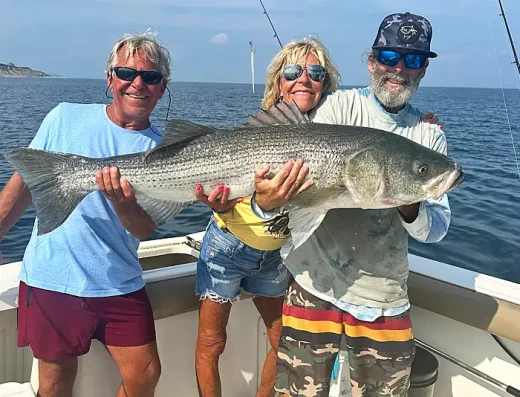
- Striped Bass – 10 to 40 lbs Strong, aggressive fighters holding on rips, boulder fields, and current edges. Peak action in summer and fall around structure.
- Bluefish – 5 to 15 lbs Fast, hard-hitting predators that chase bait aggressively. Found across rips, shoals, and surface schools in summer and fall.
- Fluke – 2 to 8 lbs Bottom-oriented fish holding on sand edges and humps. Best during steady drifts in summer.
- Black Sea Bass – 1 to 5 lbs Hold on rocky pieces and deep structure. Consistent summer and fall action.
- Tuna – 30 to 150 lbs Travel along offshore temperature breaks. Powerful, high-speed fights. Best during warm-water pushes in summer.
New Shoreham Fishing FAQs
What species can I catch with New Shoreham fishing charters?
Striped bass, bluefish, fluke, sea bass, and seasonal tuna depending on time of year.
When is the best time to fish Block Island?
Summer and fall provide the strongest overall action, with peak striped bass and tuna fishing.
Do tides matter here?
Yes. Tide strength controls rip formation and determines where bass and fluke feed.
Are trips weather dependent?
Inshore trips run steadily, but offshore tuna trips require calm weather windows.
Is gear provided?
Yes. All rods, tackle, bait, and safety gear are included.