
Portland Fishing Charters
Portland fishing charters put anglers on salmon, steelhead, and sturgeon across the Willamette River, Columbia River, and Multnomah Channel where seasonal runs create some of Oregon’s best inshore fishing.
TrustedFish connects anglers with proven local captains in Portland —no commissions, no pay-to-play listings, no BS. Every charter on our platform is invite-only, vetted for skill, local knowledge, and reputation. If they’re listed, they’ve earned it.
Top Rated Charters in Portland

Portland Fishing Guide
Portland fishing charters operate on two major rivers that change constantly with tide, flow, and clarity. The Willamette and Columbia meet just north of the city, creating a huge mix of deep channels, seams, edges, and structure that hold salmon, steelhead, and sturgeon at different times of the year. Spring Chinook move in early pulses and travel along current edges and deeper lanes until they find water they like. Fall Chinook and coho follow similar routes, but they often push farther upriver when tides slow and clarity improves. Without a guide, it is easy to fish the right river at the wrong depth or the wrong travel lane.
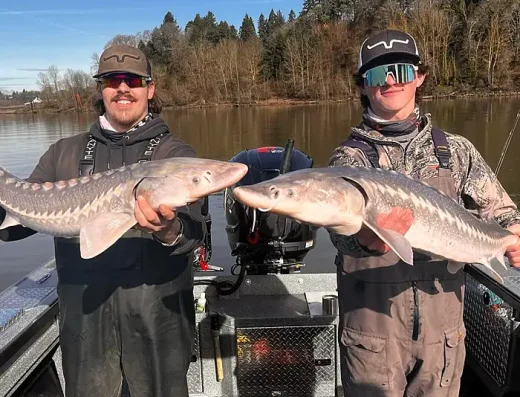
Sturgeon fishing around Portland is its own program. These fish rely heavily on bottom structure and current speed. They slide from deep channels to softer edges depending on how much water the rivers are pushing. Getting bites means anchoring in the right lane and keeping baits steady. Guides make constant adjustments because even a small change in flow can move fish a long way.
Portland fishing guides watch tide timing, clarity bands, bait presence, and river flow to put anglers exactly where fish hold that day. They pick trolling passes that follow known travel lanes, anchor in the right sturgeon slots, and adjust depth and speed to keep baits in front of fish. These rivers can be tough to read, but a Portland charter turns them into a fast, efficient, and exciting fishery.
Popular Fishing Areas
Willamette River Tidal Section
The lower Willamette near Portland is prime water for spring Chinook, fall Chinook, and coho. Salmon use the river’s edges, bridge pilings, and deeper troughs as travel lanes, shifting depth as tide and clarity change. Rising tide slows the current and often brings fish higher in the column. Outgoing tide pushes them deeper and closer to seams or structure. Clarity plays a major role because salmon respond quickly to clean or dirty water. Guides run controlled trolling passes that match tide direction and keep baits in the narrow lanes where fish rest or move through in pulses.
Columbia River Portland Stretch
The Columbia River around Portland offers salmon, steelhead, and year-round sturgeon opportunities. Deep channels, seams, and edge lines form natural routes for migrating salmon, especially when flow increases or clarity improves. When the river runs high, salmon push along protected edges and inside bends. When flow settles, they spread across deeper contours. Sturgeon hold in deeper pockets and troughs where current softens. Guides shift between trolling and anchoring depending on species and conditions, adjusting lure depth and boat position to stay in productive water. This stretch is known for quick changes, making local knowledge essential.
Multnomah Channel
Multnomah Channel is sheltered, narrow, and very productive during spring and fall salmon runs. Salmon use it as an alternative travel route when the main rivers get too dirty or flow too fast. Fish tuck along edges, bends, and deeper pockets that slow the current. Clean water often brings fish shallow, while stained water pushes them deeper. Sturgeon also feed throughout the channel, especially in areas with softer bottom. Guides run slow, controlled trolling passes that stay parallel to structure, keeping baits in front of fish instead of drifting across unproductive flats.
St. Helens to Cathlamet Corridor
Downstream from Portland, the St. Helens to Cathlamet stretch forms a broad salmon migration route. Fish move through in waves that follow tide timing, clarity, and bait presence. On strong incoming tides, salmon hold near channel edges and mid-depth shelves. During outgoing water, they often slide deeper or stack near protected points. Sturgeon remain active along deeper cuts and troughs year-round. Guides run long trolling passes that follow known travel lanes or anchor on key sturgeon edges. This region can be extremely productive when the upper rivers turn muddy or fast.
Extended Target Zones
Oregon City Falls and Upper Willamette
Above Portland, salmon stack below Oregon City Falls when conditions line up. Spring Chinook gather along rock edges, soft seams, and deeper pockets as they wait for the right flow to move higher. These fish respond strongly to clarity and temperature changes. When water stabilizes, they spread out and feed more consistently. Summer steelhead also move through this stretch and hold in lanes with cooler water. Guides use slow upstream trolling or controlled back-trolling to keep baits at the correct depth across uneven bottom, focusing on the narrow travel paths salmon consistently use.
Sauvie Island Perimeter
Sauvie Island offers a mix of flats, edges, and channels that attract salmon, steelhead, and sturgeon. Incoming tide pushes cleaner water and bait toward the island, creating short feeding windows along its edges. Outgoing tide concentrates fish in deeper lanes closer to the main river. Sturgeon travel between soft-bottom pockets depending on current strength. Clarity changes quickly around Sauvie Island, often shifting fish position within an hour. Guides reposition based on bait marks, tide slope, and fish movement, keeping their spread inside the natural travel lanes that wrap around the island.
Fishing Seasons in Portland
Spring
Spring brings the first major push of Chinook into the Willamette, Columbia, and Multnomah Channel. These fish move in small but powerful pulses and hold along deeper edges, seams, and travel lanes. Clean, stable water usually produces the best bite. Sturgeon fishing is strong as well, with fish concentrating in deeper channels influenced by runoff. Guides focus on controlled trolling for Chinook using precise depth placement, while sturgeon fishing requires steady baits and exact anchor positioning. Bite windows often line up with clarity changes or tide transitions, making timing a big part of successful spring trips.
Summer
Summer offers mixed opportunities around Portland. Salmon begin staging offshore and near the Columbia, feeding on anchovies and herring before entering the system. Steelhead respond strongly to light conditions and clarity, holding in mid-depth lanes and seams. Sturgeon stay active along deep troughs and soft-bottom areas. Warmer water increases fish movement, so guides adjust speed, lure profile, and depth to stay in productive water. Stable weather allows long trolling passes, while wind can quickly change clarity and push fish into deeper edges. This is a versatile season with multiple species available on the same day.
Fall
Fall is the strongest salmon season for Portland. Chinook and coho move through in large waves, responding heavily to tide timing, clarity, and bait presence. Flood tide brings fish upriver and often produces the best action. Ebb tide can stack fish near channel mouths and deeper travel lanes. Sturgeon continue feeding well in deeper channels. Guides slow their presentations, refine troll angles, and match lure depth to changing conditions. Fall fishing is consistent and productive, but fish move fast, so staying on the right lane is critical.
Winter
Winter centers on sturgeon fishing, with fish concentrating in deep, slow-moving channels where temperature changes are minimal. Cold water improves clarity, making scent and bait stability even more important. Salmon remain offshore in deep wintering areas and rarely push upriver during storms. Guides target predictable sturgeon lanes and adjust anchor placement, leader length, and bait type based on current speed. Calm weather allows access to sheltered stretches where fish hold close to bottom. Winter fishing is slower paced but highly rewarding, especially for anglers targeting large sturgeon.
Top Gamefish in Portland
- Spring Chinook – 10 to 25 lbs Powerful upriver fighters that hold along seams and deeper edges. Peak in early spring and respond best to clean, stable water.
- Fall Chinook – 15 to 35 lbs Hard-hitting salmon that stage along channels and travel lanes. Arrive in waves during fall tides and feed aggressively.
- Coho Salmon – 5 to 12 lbs Fast, surface-active fish that follow bait and clean water. Strong through late summer and fall.
- Steelhead – 4 to 12 lbs Aerial, fast-moving fighters holding along seams and mid-depth pockets. Present in both summer and winter runs.
- White Sturgeon – 20 to 200 lbs Heavy, bottom-oriented fish found in deep channels and soft seams. Strong year-round action with the right anchor setup.
Portland Fishing FAQs
What species can I catch with Portland fishing charters?
Chinook, coho, steelhead, and sturgeon depending on season.
Do tides matter in Portland?
Yes. Both rivers are tide influenced and fish movement changes with each cycle.
When is the best time to fish Portland?
Spring and fall for salmon, winter and spring for sturgeon, and summer for mixed action.
Are guided trips necessary?
Highly recommended. River conditions change fast and productive lanes are narrow.
Do charters supply gear?
Yes. All rods, tackle, and safety equipment are included.