
Rhode Island Fishing Charters
Rhode Island fishing charters run deep into Block Island Sound for stripers and tuna, or stick close to the salt ponds and bays for fluke, tautog, and scup.
TrustedFish connects anglers with proven local captains Rhode Island —no commissions, no pay-to-play listings, no BS. Every charter on our platform is invite-only, vetted for skill, local knowledge, and reputation. If they’re listed, they’ve earned it.
Top Rated Charters in Rhode Island
Click to View Destinations
Rhode Island Fishing Guide
Rhode Island may be the smallest state, but it punches way above its weight when it comes to fishing. The entire southern coast faces open Atlantic, with inshore waters protected by a stretch of barrier beaches, salt ponds, and tidal estuaries. It’s easy to launch out of places like Point Judith, Newport, or Westerly and be fishing within minutes—whether you’re drifting for summer flounder in 40 feet of water or chasing topwater schoolies along rocky jetties.
Offshore charters head toward the 30-fathom line and beyond, usually around Coxes Ledge, The Dump, and toward the Continental Shelf. Full-day trips run for tuna, mahi, and even white marlin when conditions line up. Boats generally launch from Galilee or Sakonnet and may run 20–60 miles, depending on target species and season. Inshore trips tend to be shorter—half or 3/4 day—and focus on stripers, bluefish, fluke, or black sea bass.
Freshwater’s no slouch either, with solid largemouth and trout fishing in places like Worden Pond, Watchaug Pond, and the Wood River. Most guides here run smaller skiffs or jon boats, targeting bass on soft plastics or fly-fishing for stocked rainbows in shaded stretches.
Whether you’re hopping on a six-pack center console or a 40-foot downeast, Rhode Island waters are compact, productive, and quick to access. It’s one of the few places where you can leave the dock at sunrise and be casting over a rip or trolling for yellowfin before your coffee’s even cold.
Regional Fishing Highlights
Block Island Sound & South Shore
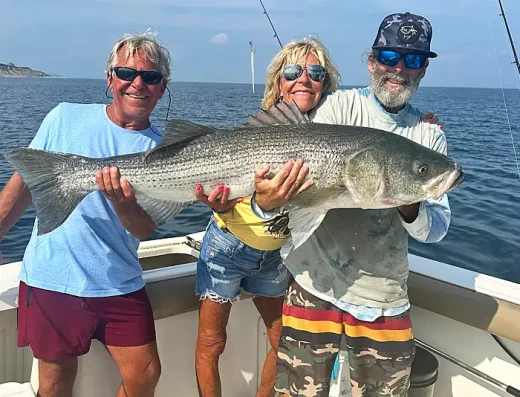
From Watch Hill to Point Judith, the south coast offers fast access to reefs, rips, and nearshore structure. Charter boats out of Snug Harbor and Charlestown chase big striped bass on eels and live bunker, especially around Southwest Ledge and the Block Island wind farms. Fluke and black sea bass are found just outside the breachways, and blues show up heavy in summer. Half-day trips often stay inside 10 miles. Fall sees great topwater fishing.
Mobile Bay & Delta
Inside the bay, you’ve got sheltered waters, rocky shorelines, and bait-rich harbors. Light tackle boats work the edges for stripers and blues, especially in spring and fall. Scup fishing is excellent around piers and pilings. The upper bay cools off faster, but spots like Conimicut Light and the Jamestown bridges hold fish year-round. Ideal for short trips or newer anglers.
Newport & Sakonnet
Newport charters have quick runs to both offshore ledges and inshore rocks. Fly guys and light tackle captains work the cliff lines and inlets for bass and bonito. The Sakonnet River can be sneaky good in spring, with migrating fish staging in the current seams. Some boats here specialize in combo trips—fluke in the morning, stripers in the evening.
Inland Lakes & Ponds
Most folks don’t come to Rhode Island for freshwater, but the local scene’s better than you’d think. Worden Pond is shallow but holds solid bass. Watchaug is clearer, with both smallmouth and largemouth action. The Wood River stays cool enough for trout year-round in sections. Local guides favor light spinning gear and quiet approaches.
Fishing Seasons in Rhode Island
Spring
April brings the first push of schoolie stripers into the salt ponds and back bays. By May, bigger fish are moving into the bay and off Block Island. Fluke season starts heating up late May. Freshwater trout fishing is solid early, especially after stockings, and largemouth bass are active on beds by late spring.
Summer
June through August is prime time for fluke, sea bass, and offshore tuna. Stripers are thick at night around Block Island, often on live eels. Inshore mornings can mean scup and blues, afternoons switch to trolling or jigging offshore. Lakes get weedy, so freshwater guys fish early or deep.
Fall
September kicks off the fall run. Striped bass and blues blow up bait from Newport to Westerly. Albies show up inshore, blitzing near the beaches. Tog season opens, and shallow wrecks start producing. Offshore slows down a bit, but there’s still shots at tuna on short runs. Great time for fly and light tackle fishing.
Winter
Most saltwater action shuts down, but hardcore toggers still run short trips if weather allows. Freshwater turns to ice-out trout and pickerel by mid to late winter. Some brackish ponds hold over small stripers if you’re willing to grind. Not a high-volume season, but doable if you pick your days.
Most Popular Gamefish in Rhode Island
- Striped Bass – 20–40 inches. Found around reefs, bridges, and ledges spring through fall. Targeted with live eels, bucktails, and topwater plugs.
- Bluefish – 4–12 pounds. Chased inshore and around rips in summer. Hit metal jigs, poppers, and trolled spoons hard.
- Fluke – 16–28 inches. Drifted on sandy bottom with squid or gulp rigs. Best from late May through August.
- Black Sea Bass – 1–5 pounds. Hold tight to structure. Drop baited jigs or hi-lo rigs near wrecks.
- Tautog – 2–8 pounds. Found near rocky bottom. Use green crabs on single hooks tight to structure.
- Scup – 8–16 inches. Caught on baited rigs near piers, rocks, and reefs. Great for kids and action-packed.
- Yellowfin Tuna – 30–100 pounds. Trolled or chunked offshore. Best shots mid to late summer out near The Dump.
- False Albacore – 5–15 pounds. Fast and picky. Found inshore chasing bait late summer and fall. Hit epoxy jigs and flies.
- Largemouth Bass – 1–5 pounds. Caught in ponds and lakes on plastics, frogs, and crankbaits. Spring and early summer best.
- Rainbow Trout – 10–18 inches. Stocked in rivers and ponds. Hit spinners, worms, or small flies in cooler months.
Rhode Island Fishing FAQs
Do I need a license to fish in Rhode Island?
Yes. Saltwater anglers need a RI Recreational Saltwater Fishing License unless they have one from a reciprocal state. Freshwater requires a separate license.
What’s the best time of year for Rhode Island striped bass?
Mid-May through mid-October, with the biggest fish often caught around Block Island during summer nights on live eels.
Can I keep fluke and sea bass in Rhode Island?
Yes, but both have seasonal openings, size, and bag limits that change yearly. Check with DEM before you go.
Is there good fishing inside Narragansett Bay?
Definitely. Spring and fall see solid striper action, and summer brings in scup, fluke, and occasional blues around bridges and drop-offs.
Do charters supply gear and bait?
Yes. Nearly all saltwater guides provide everything you need. Just bring food, drinks, and weather-appropriate clothing.
Are Rhode Island fishing trips kid-friendly?
Plenty are. Inshore half-day trips for scup, sea bass, or fluke are great for kids and new anglers. Some boats specialize in family trips.
How far offshore do tuna trips go?
Usually 30–60 miles depending on where the fish are. Most boats run to Coxes Ledge or The Dump on full-day trips.
Can I fish year-round in Rhode Island?
You can, but winter is limited. Freshwater options and tautog are still available, but most saltwater charters shut down until spring.
Where do most Rhode Island fishing charters leave from?
Popular ports include Galilee (Point Judith), Newport, Snug Harbor, and Sakonnet. Some inland trips launch from Watchaug Pond or Worden Pond ramps.