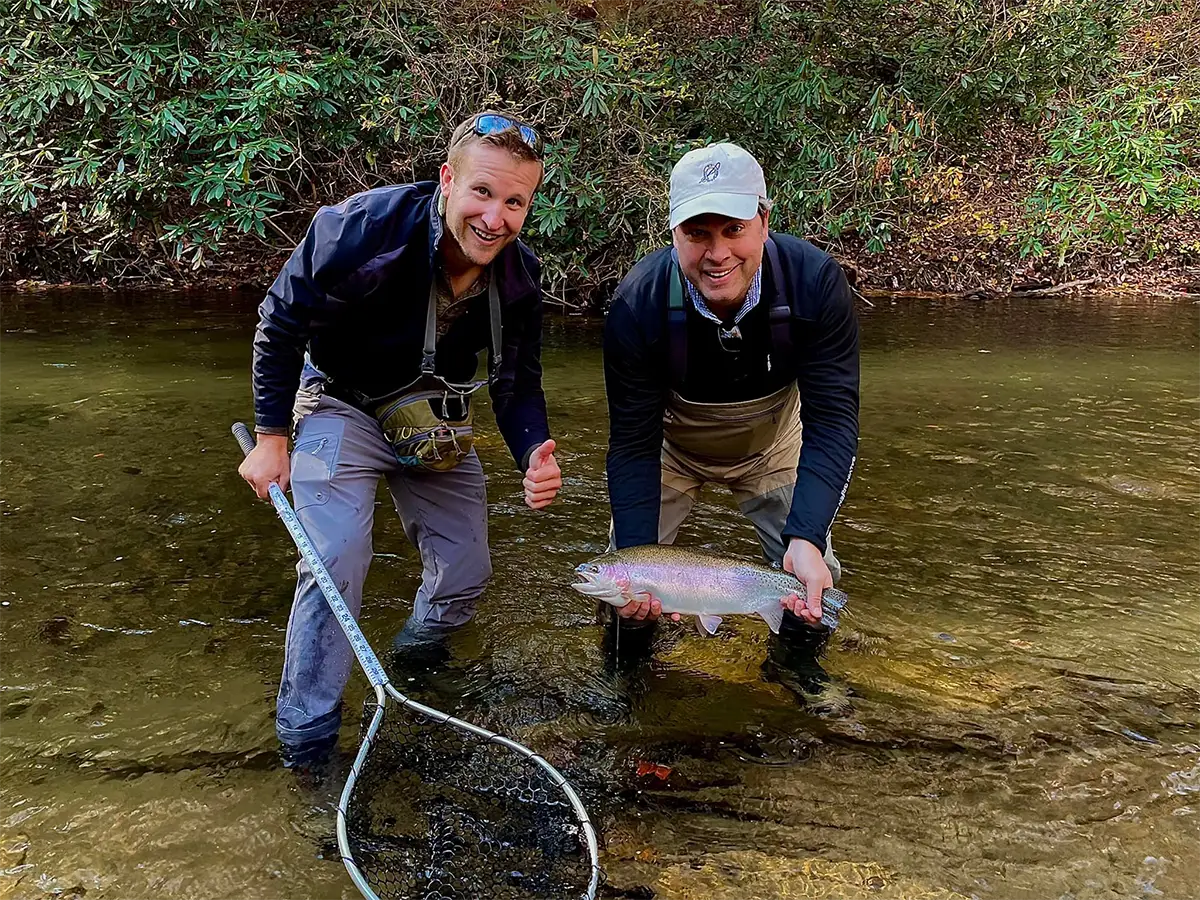
November is when North Georgia finally settles into real trout weather. Cold nights drop water temperatures into the ideal feeding range, daytime highs level off, and the rush of summer pressure disappears. With steady flows and clear water, trout hold tighter to structure, feed in predictable windows, and react sharply to well-placed flies. Georgia Wild Trout, run by Captain Tad Murdock, is built for these conditions. From Cumming to Blue Ridge, Ellijay, Helen, Dahlonega, and Blairsville, this is the month when his knowledge of seasonal behavior matters most.
Trout movement in November becomes more deliberate. Browns stage near deeper pockets and undercut banks as they prepare for or recover from spawning activity. Rainbows slide into riffles and transition seams where drifting food is easiest to intercept. Brook trout stay active in higher-elevation water, especially on clear, cold mornings when they slide out of shadows to feed. It’s a mix of species that rewards anglers who can control drift speed, change depth quickly, and read micro-currents. Capt. Tad guides clients through these adjustments in real time, showing how to get flies down fast without spooking fish in clear water.
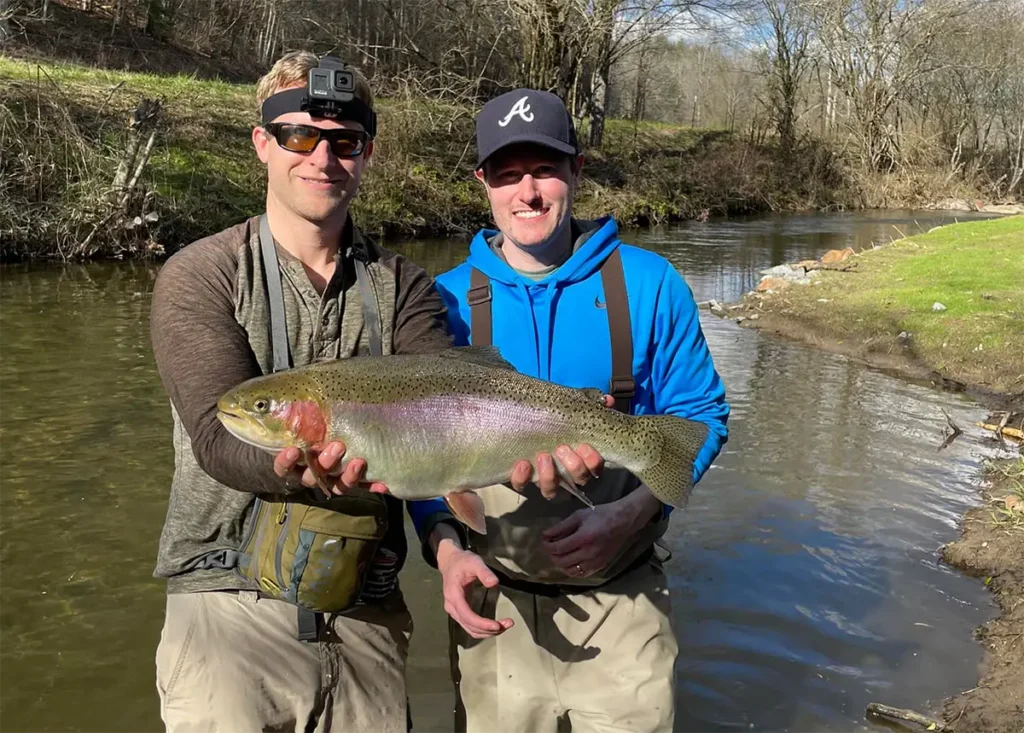
Weather is another defining element. Mornings can start in the 40s, but mid-day sun often bumps water temps enough to trigger short, reliable bite windows. Expect low humidity, crisp air, and stable water clarity on most rivers. The Chattahoochee near Atlanta fishes especially well, with cold releases from the dam creating perfect conditions for new anglers learning to cast, mend, and manage line. In the mountains, smaller creeks run quieter and cleaner than in summer, which turns November into an ideal month for refining presentation skills and learning how trout respond to subtle fly changes.
Georgia Wild Trout’s access to both public and private waters is a major advantage this time of year. Public mountain streams offer strong wild trout opportunities, while private water becomes a controlled environment with steady flows, oxygen-rich riffles, and consistent trout movement. These private fisheries often hold larger rainbows and browns, many breaking the twenty-inch mark. November gives anglers their best chance to target these bigger fish without the heat stress and unpredictable flows of summer. Capt. Tad teaches how to approach these waters with patience, how to read soft edges where big trout sit, and how to time hooksets in colder water.
Anglers looking for a challenge can attempt a November trout slam—rainbow, brown, and brook trout in one day. It requires mobility, solid technique, and a sharp understanding of seasonal patterns, all of which Capt. Tad handles through smart water selection and efficient time management. For those interested in technique-driven fishing, November is also a standout month for euro nymphing. Clear water reveals pocket seams, drop-offs, and transition lines that respond extremely well to tight-line presentations and small, heavy flies.
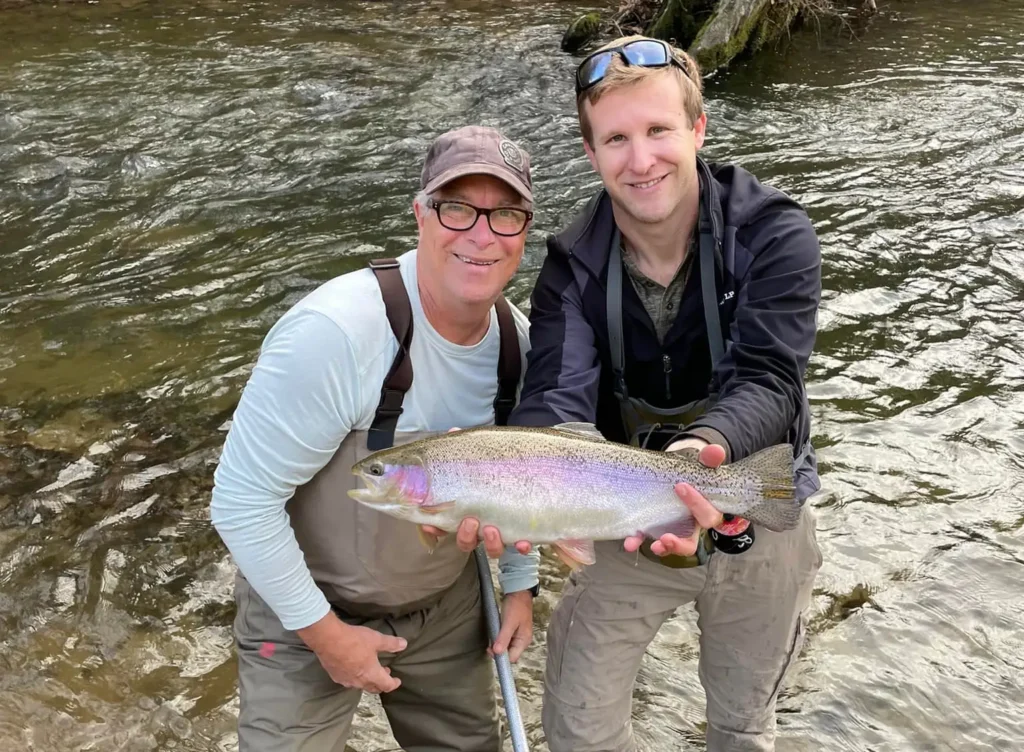
Expect hands-on guidance, steady coaching, and a focus on real fish behavior rather than gimmicks. All trips include rods, reels, flies, waders, and boots, plus transportation from nearby lodging if needed. Half-day and full-day trips are available, with lunch and drinks provided on full days so anglers can stay focused on the fishing.
November strips trout fishing down to its fundamentals: clear water, cooler temperatures, sharp instincts, and steady technique. With Georgia Wild Trout and Capt. Tad’s experience in Fisheries Biology and decades of local knowledge, anglers get a direct path to understanding how these fish move, feed, and respond as the season shifts toward winter. It’s one of the cleanest, most rewarding months to fish North Georgia, and one of the best times to book a guided trip that actually teaches you something meaningful on the water.