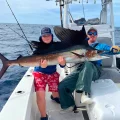
The final week of December is often the most watched stretch of the month off Miami, but it’s also one of the most misunderstood.
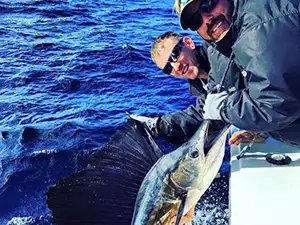
By this point, the fishery is fully capable of producing nearshore sailfish, yet nothing is guaranteed. Some years, holiday week lines up with tight current, recent fronts, and bait pushed against the reef, creating quick nearshore opportunities. Other years, sailfish remain just offshore with only brief inshore windows that open and close within a single tide or day.
What separates a productive holiday week from a quiet one is alignment, not timing. Calendar pressure doesn’t move fish. Current position, wind direction, and bait displacement still control everything.
Current position during the holiday window
Late December often sees sharper current swings than earlier in the month. When the Gulf Stream pushes tight to the reef during this period, sailfish can show up close fast, sometimes with very little warning. When the current slides east, fish frequently stay just outside the reef line, and inshore opportunities become short-lived.
Because Miami’s shelf is narrow, these shifts happen quickly. During the holiday week, conditions can look promising one day and unproductive the next without any obvious surface change. That’s why late December requires daily attention rather than expectation.
Weather patterns at the end of the month
Cold fronts tend to arrive with more regularity by the final week of December, but their spacing matters more than their strength. A single front may trigger bait movement without creating sustained sailfish activity. Back-to-back fronts, even mild ones, usually reposition bait more aggressively and produce clearer sailfish responses.
That said, holiday week rarely settles into a stable pattern. Even when conditions improve, windows tend to be brief. Sailfish may push inshore for short stretches before sliding back out once wind or current relaxes.
Bait movement and increased pressure
By late December, fishing pressure is noticeably higher. Holiday traffic, combined with persistent current, makes it difficult for bait to remain stationary offshore. As forage gets displaced, sailfish often travel edges rather than holding in one area.
This pressure is one reason nearshore encounters can happen quickly during holiday week when conditions allow. It’s also why those encounters don’t always last. Once bait shifts again, sailfish move with it.
Why holiday week can feel hit or miss
Late December often amplifies Miami’s strengths and weaknesses at the same time.
When current, wind, and bait line up, sailfish can appear close to shore with very little buildup. When one element falls out of place, there’s almost no buffer period. The fishery doesn’t ease into productivity. It either turns on briefly or stays quiet.
That’s why holiday week rewards flexibility more than planning. The opportunity is real, but it’s narrow.
How late December fits into the season
The last week of December is not the peak of Miami’s sailfish season. It’s the point where the system becomes fully primed. The same mechanics that drive consistent nearshore sailfish later in winter are already in place, even if they only show themselves in short bursts.
Holiday week often offers the first real glimpse of what January and February can deliver, provided conditions continue to stack. For that reason, watching current position and bait movement closely during this period matters more than the date itself.