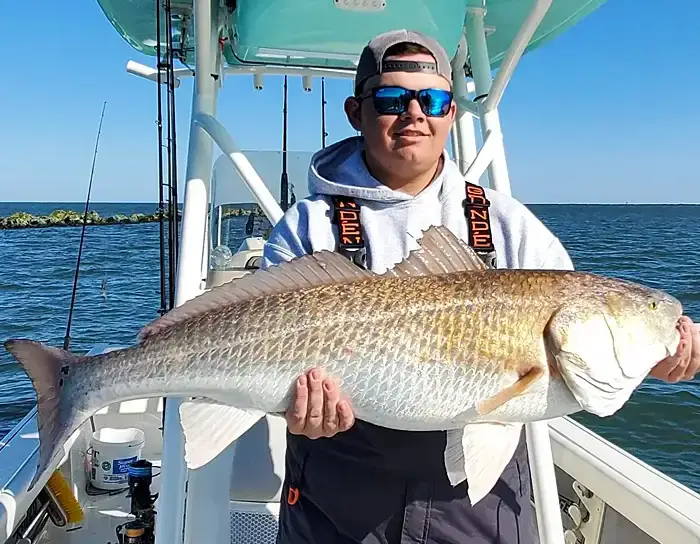
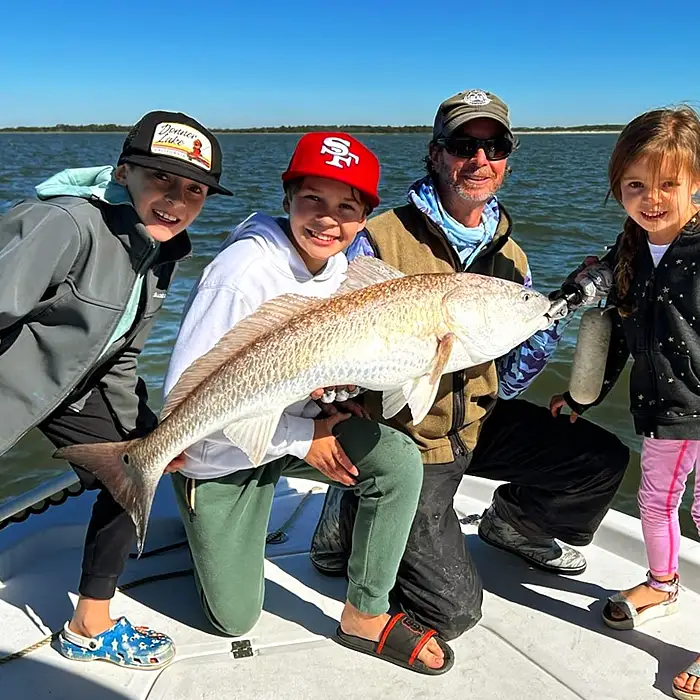
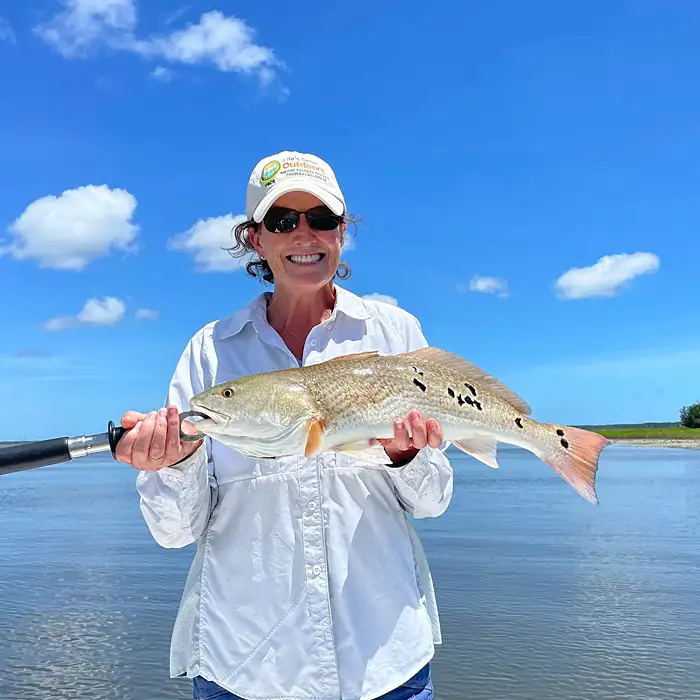
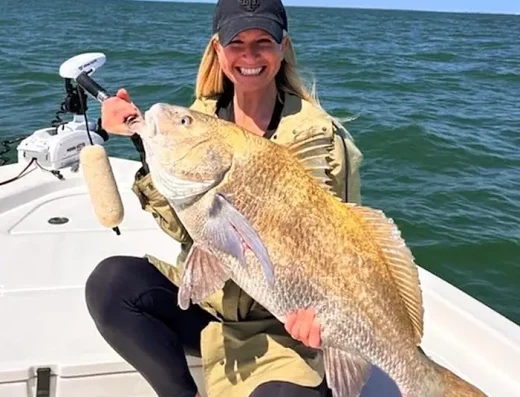
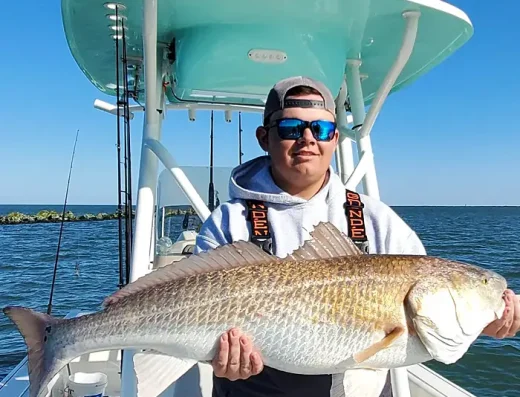
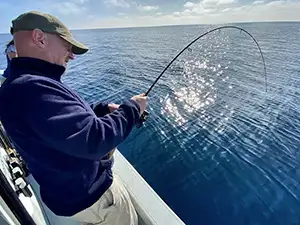
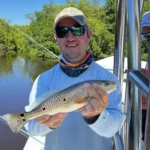
Fall is one of the strongest inshore seasons Charleston has. As water temperatures slide into the 60s, redfish settle into predictable patterns on the flats, marsh lines, and deeper creek bends. Shrimp stack up in the creeks and mullet schools hug the banks, and this steady bait flow keeps reds feeding all day. Clearer water and lighter boat traffic help even more. You get calmer mornings, cleaner visibility, and redfish grouped in tight pods across shallow mud flats and shell bottom. Guides look for these schools daily because they move slow, hold large numbers of fish, and give clients constant action with light tackle or fly gear.
Conditions in Charleston During the Fall
Weather shifts play a big role in how the bite shapes up. Fall temperatures usually sit between the mid 60s and upper 70s, with cooler mornings that spark early feeding. When the rain lets up, the creeks clear and visibility improves. Water temperatures drifting down into the 60s help gather redfish into deeper pockets on low tide and grass edges during higher water. Northeast winds are common, but with Charleston’s marsh network, guides can always find a protected area that still holds fish.
Charleston also has a large tidal swing, so captains plan around tide stages instead of set times. A high tide will push reds deeper into grass edges and flooded flats to hunt shrimp. As the tide drops, those same fish slide out toward creek mouths, shell banks, and narrow pockets. Low water reveals shallow troughs and depressions where big schools gather tight. Mid tides offer transition shots as bait moves from structure to open water. Most fishing locations are close, with short five to fifteen minute runs to protected creeks, oyster bars, or mud flats. Even on a breezy day, the fishery stays accessible because the marsh provides natural cover.
What Makes Fall Redfish Special
Fall is known for its schooling behavior. Hundreds of reds can pack into tight groups on hard bottom and shallow flats. In clear water, these fish are visible from a distance, giving anglers long sight-fishing shots. Reds feed with more confidence this time of year because shrimp, mullet, and small crabs are constantly moving, and that steady food supply makes them aggressive. Slot-size reds work shell points and marsh bends, while larger overslot fish hold deeper in bends and channels. Calm mornings sometimes bring surprise topwater action as reds push bait against the banks.
How Charleston Guides Target Redfish in Fall
Most trips rely on simple and productive methods that work well in cooler water. Live shrimp under popping corks remain the most consistent setup, especially around moving water and creek points. Cut or live mullet is another reliable choice when targeting bigger fish on bottom transitions. Artificial paddletails, jerk shads, and gold spoons produce well along grass lines or across shallow mud flats where schools roam. On clear low tides, sight-fishing becomes the strategy, whether you are throwing soft plastics or fly gear. Local guides are quick to adjust because fall conditions can shift with wind and tide, and their ability to reposition the boat and read the marsh is what keeps the bite steady.
Why Booking a Guide Matters in the Fall
Fall is peak inshore season and one of the most consistent times to fish Charleston, but it is also highly tide-driven. Guides know which creeks clear first, where schools gather on low water, and how bait moves through the marsh every week. Their knowledge makes the difference between picking at scattered singles and staying on tight groups of feeding fish. For beginners, fall offers reliable action with easy rigs. For experienced anglers, sight-casting and topwater opportunities add a technical element. With calmer boat traffic and better clarity, guided trips become even more valuable.
What Else Bites in the Fall
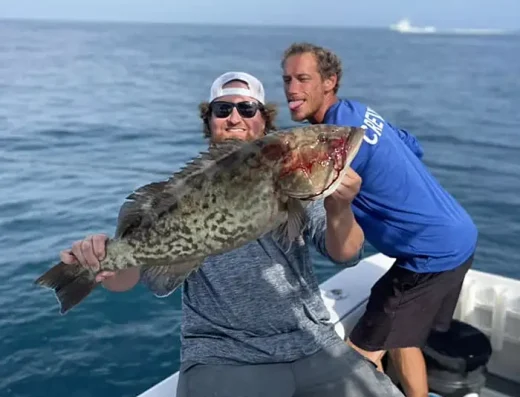
Speckled trout, black drum, sheepshead, and flounder stay active through fall and fill in slow tide windows around structure, docks, and deeper creek mouths. Many trips mix these species in while keeping redfish as the main target.