Venice sits at the far end of the Mississippi River Delta, wrapped by marsh, passes, and open Gulf water. November concentrates everything that makes this fishery so strong: cooler temperatures, clearer water, steady bait movement, and fish shifting into tight fall patterns. It’s one of the most consistent months of the year, with dependable inshore action and reliable offshore opportunities. Short runs, aggressive strikes, and mixed-bag potential are standard this time of year.
What’s Biting in November
November is a transition month, but the fishing is anything but slow. Redfish of all sizes push deeper into the marsh. Speckled trout gather along deeper banks, bay edges, and channels. Bull reds continue to stage in the passes, feeding heavily before winter. Offshore, yellowfin tuna start stacking up around platforms and floaters, and blackfin become plentiful around shrimp boats and rigs. Water quality typically improves after early-fall systems, and feeding windows stretch longer through the day.
Most guides describe November as “steady”—fish hold in predictable spots, fronts move through cleanly, and bait stays abundant across the marsh and Gulf.
Top Gamefish in November
November brings a concentrated lineup of species around Venice, with both inshore and offshore fish settling into predictable fall patterns. Cooler water, steady bait movement, and stable tides tighten everything up, making it easier to target specific gamefish. The following species make up the core of what most anglers focus on this month, each offering reliable action and distinct opportunities across the marsh and Gulf.
Redfish
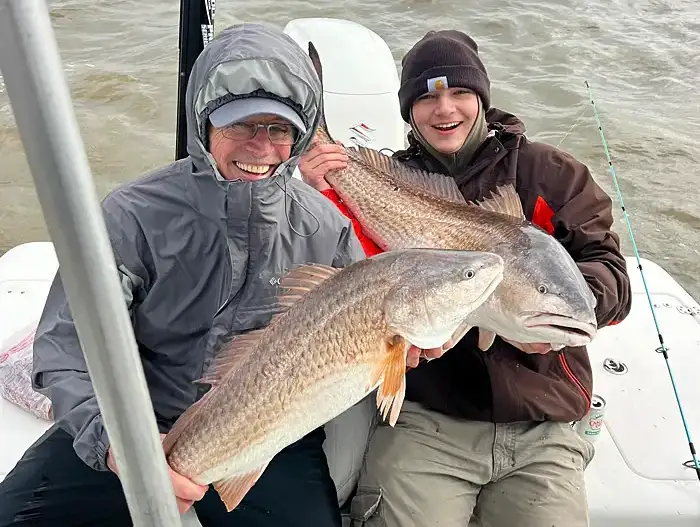
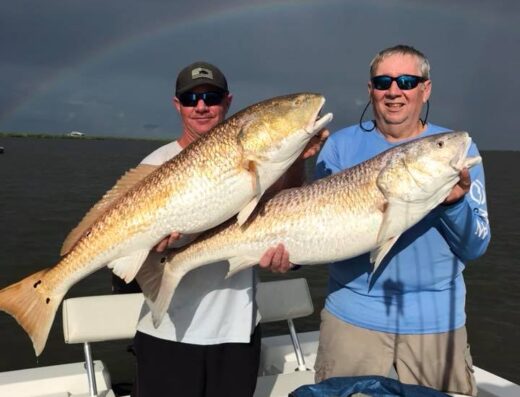
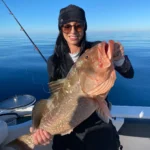
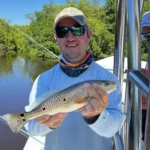
This is prime time for Venice redfish. Slot reds push into ponds, drains, and bayous, feeding on shrimp and mullet. Bulls remain active around the river mouths, points, and deeper ledges. Calm mornings still allow for sight-casting opportunities, but most action comes from edges and moving water. November is an ideal month for beginners, families, and mixed-experience groups because the bite remains strong day-to-day.
Speckled Trout
As water temperatures drop into the low-to-mid 60s, speckled trout settle into classic fall patterns. Points, bay edges, shell-bottom areas, and deeper bends all produce steady action. Popping corks with shrimp, soft plastics, and jigs along bottom transitions are reliable. The average size improves compared to early fall, and limits are common when weather cooperates.
Yellowfin Tuna
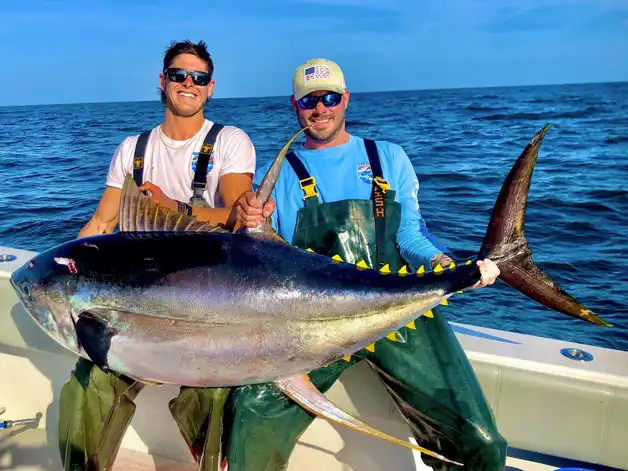
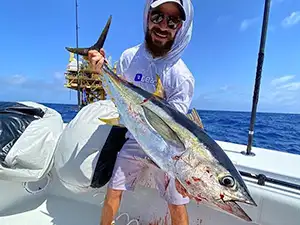
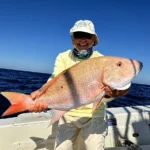
November is one of the standout tuna months in Venice. Yellowfin gather around deepwater platforms, floaters, and contour breaks, feeding on squid and offshore bait pushed by shifting winds. Fish in the 60–100 lb class are common, with opportunities at larger models. Live baiting, chunking, drifting, and kite presentations are all used depending on conditions. Sea conditions are generally more manageable than mid-winter, giving offshore crews solid weather windows.
Blackfin Tuna
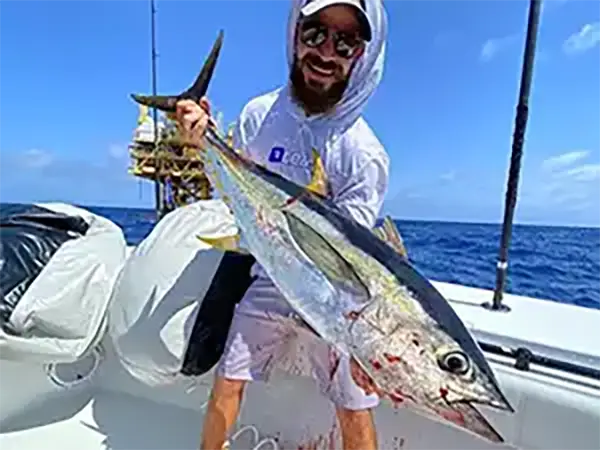
Blackfin arrive in thick groups around rigs and shrimp boats. They’re aggressive, fast, and perfect for filling the box alongside yellowfin. Jigs, chunks, and small live baits all work well this month.
Sheepshead and Drum
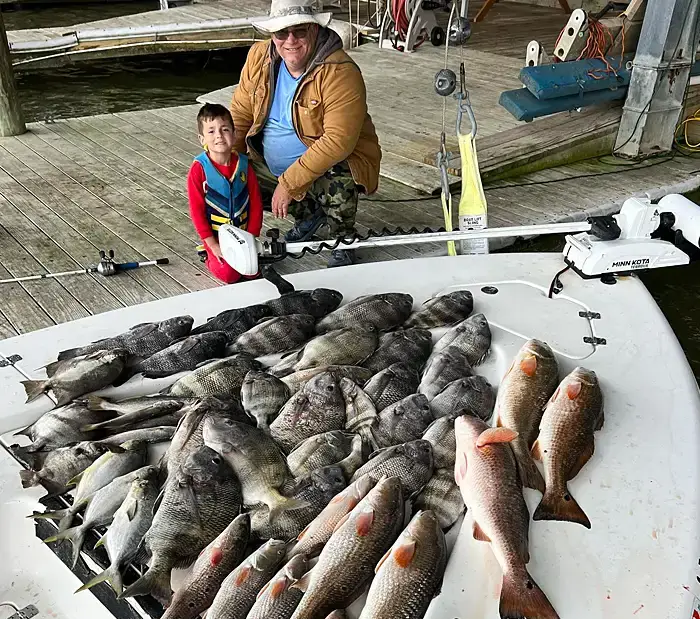
These species are dependable fallback options along rocks, bridges, and structure when cold fronts make conditions tougher for the primary targets.
November Weather Conditions
November brings cooler mornings, mild afternoons, and far less humidity. Air temperatures usually sit between 55°F and 72°F. Water temps hover in the 60s inshore and slightly warmer offshore. Cold fronts begin to pass regularly but are usually short-lived and weaker than mid-winter systems.
Wind direction plays a major role:
North winds drop water levels and clear the system, often improving redfish and trout action.
South winds bring water back into the marsh and can muddy the outer bays but still allow productive fishing in protected areas.
Rain tends to be brief and scattered. Most days remain fishable, especially inshore. Offshore runs depend more on wind and swell timing, but November offers more weather windows than late winter or early spring.
What to Expect
November gives anglers a wide range of choices. Most inshore runs are short—often 5–20 minutes into protected marsh or bays. Expect steady redfish action at cuts, drains, and outer banks. Trout hold predictably on deeper edges, ledges, and transitions. Light tackle, popping corks, and soft plastics handle the bulk of the work.
Offshore trips typically focus heavily on tuna. Boats may start at a floater, move to a platform, or drift near shrimp boats depending on current, bait, and wind direction. Afternoon periods often bring stronger tuna activity around structure and shadow lines.
Crowds remain light. Hunting season pulls local pressure off the water, leaving more room across the marsh and offshore grounds. Water clarity improves throughout the system, which helps with sight-casting and makes bait presentations more effective.
What to Bring
Guides generally supply tackle, bait, ice, and safety equipment, so packing stays simple:
Clothing
Layered clothing for cool mornings and warm afternoons
Windbreaker or waterproof shell
Polarized sunglasses
Hat and neck protection
Deck shoes with good grip
Personal Items
Sunscreen
Small dry bag
Water and light snacks
Motion medicine for offshore trips
Optional Gear
Sunscreen
Small dry bag
Water and light snacks
Motion medicine for offshore trips
For offshore trips, bring an extra warm layer—wind chill on long runs can be noticeable.
November is a high-confidence fishing month in Venice. Inshore anglers get reliable redfish and trout action with improved water clarity. Offshore crews target active tuna schools with consistent results. Cooler weather, predictable fish movement, and manageable conditions make this a strong month for both first-time and returning anglers.
Below is a list of local Venice LA fishing charters that run these November patterns daily and specialize in both inshore and offshore trips