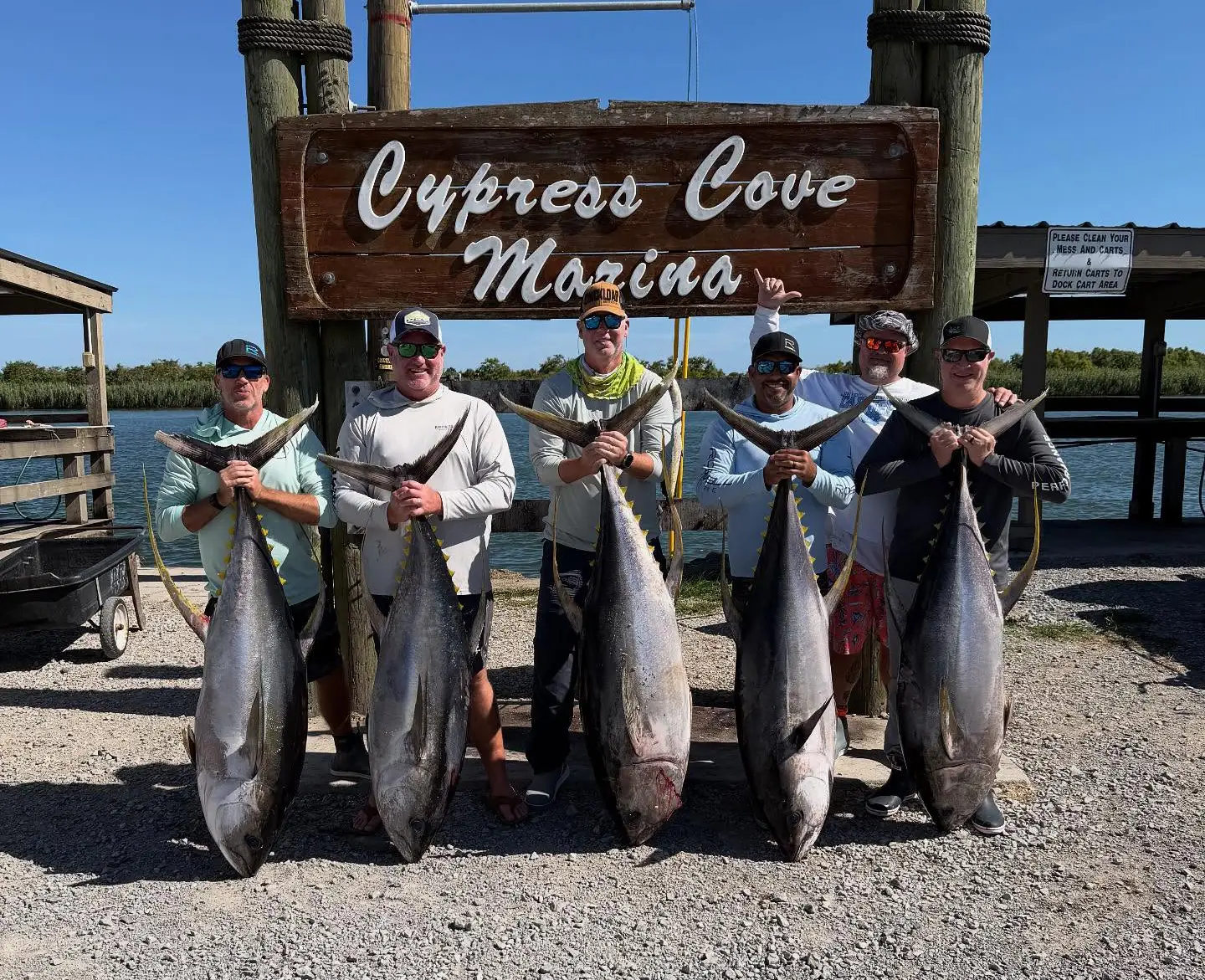
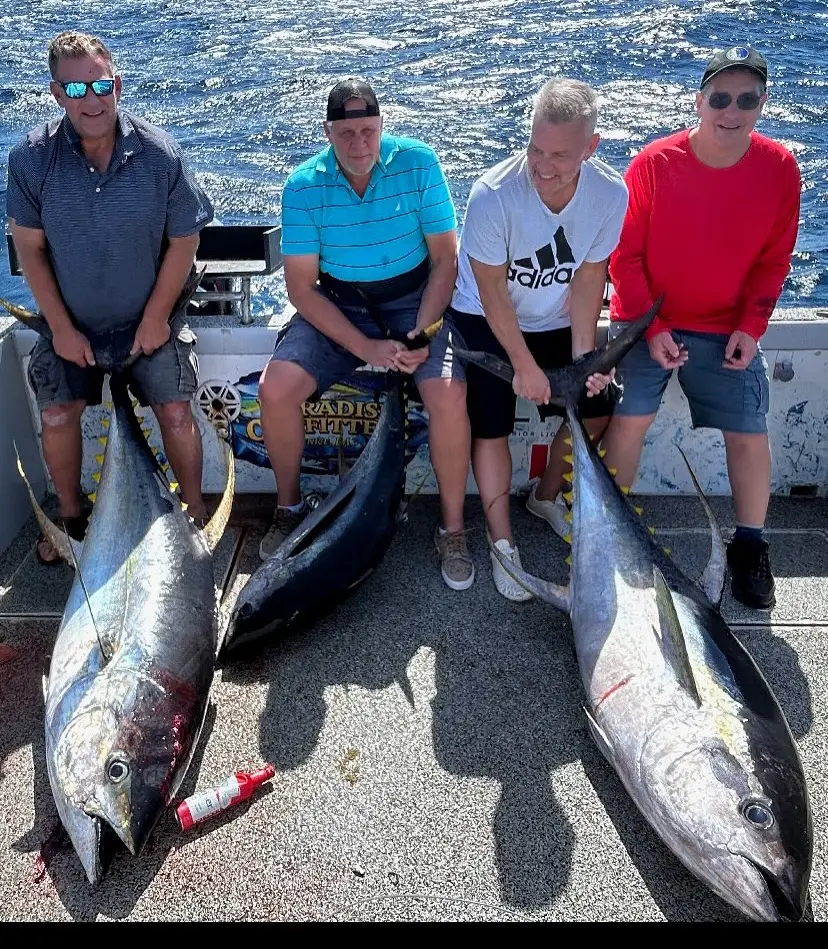
The final week of December out of Venice, Louisiana is a structure-driven tuna fishery. Yellowfin tuna are present and catchable, but success depends on timing, current position, and how anglers adapt to winter conditions rather than chasing surface activity.
Water temperatures are cooler than earlier in the month, and tuna behavior reflects that shift. Fish are less likely to roam and more likely to hold near deepwater oil and gas structures, shelf edges, and defined contour changes where current concentrates bait. Late December fishing rewards patience and precision over speed. Water temperatures are cooler than earlier in the month, and tuna behavior shifts accordingly. Fish tend to hold tighter to structure, deeper ledges, and areas where current provides consistent bait flow rather than roaming freely across open water. Late December is less about covering ground and more about fishing proven zones with patience.
Offshore structure and tuna positioning
From Venice, Louisiana, most late December tuna action centers on proven deepwater structures and steep breaks rather than open-water searching. When current remains steady, yellowfin tuna typically hold on the up-current side of rigs or along edges where bait is funneled consistently.
During daylight hours, tuna often stay deeper in the water column, especially after cold fronts. Vertical presentations and controlled drifts become more effective than high-speed trolling or wide-area scouting. Fish are present, but they are selective and position-oriented.
Night fishing patterns
Night fishing remains one of the most reliable approaches during the last week of December out of Venice. Reduced pressure and artificial light draw bait higher in the water column, which often brings tuna into more accessible feeding zones.
The most consistent action often comes from:
Fishing well-lit structures with steady current
Maintaining quiet boat positioning
Allowing baits to settle naturally rather than forcing movement
Bites may come in flurries rather than steady action, but quality fish are common during these windows.
Weather and frontal influence
Cold fronts moving through the northern Gulf are a major factor during this period. These fronts do not push tuna out of the area, but they do influence when and how fish feed.
Strong north winds and falling temperatures often slow daytime activity immediately following a front. Once conditions stabilize, tuna return to predictable holding areas near structure. Trips timed around post-front recovery windows consistently outperform those run during active weather transitions.
Late December fishing is less about perfect forecasts and more about spacing between fronts.
Bait presence and pressure
Bait remains available offshore during this period, but it is more tightly grouped and less mobile than earlier in the season. Squid, small fish, and deeper bait layers keep tuna stationed near structure rather than roaming.
Fishing pressure is moderate to high during the holiday window. This encourages tuna to hold deeper and feed more selectively. Adjusting depth and slowing presentations often makes the difference between slow days and productive ones.
What to expect during Dec 26–31
Late December tuna fishing out of Venice is not about fast limits or constant surface action. It is about:
Fishing proven structure
Timing low-light periods
Working deeper water methodically
Staying patient through slower stretches
When conditions align, quality yellowfin tuna are very much in play, even if action comes in shorter bursts.
Fishing Venice, Louisiana in late December with a local captain
Tuna fishing during the final week of December requires experience with winter offshore patterns and Gulf structure behavior. Knowing which areas hold fish after fronts and how tuna reposition as conditions change shortens the learning curve significantly.
Anglers looking to maximize their time often choose to fish with a highly skilled local captain who understands how tuna behave offshore of Venice, Louisiana during winter conditions. An experienced captain adjusts strategy in real time based on weather, current, and pressure rather than relying on fixed plans.
For those looking to book a tuna charter or learn more about offshore fishing options out of Venice, Louisiana, vetted captains and additional information are available through the site.